
Wedding Buffet Packages: Tips for Better Variety and Guest Experience
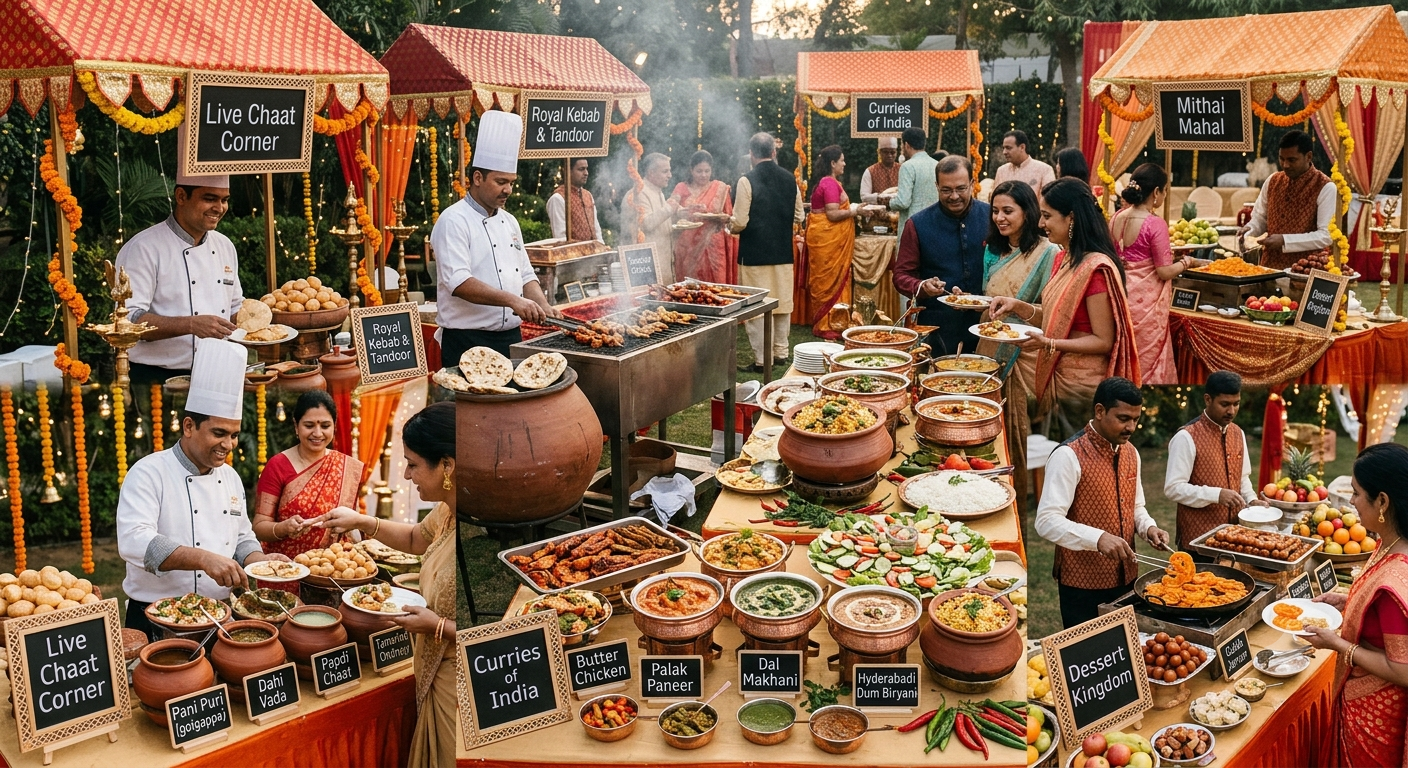
When guests complain about a wedding buffet, they almost never complain about the food. They complain about the queue, the dish that had gone cold, and the crush around the one counter everybody wanted. Those are layout and staffing problems, not menu problems, and wedding buffet packages are rarely compared on any of them.
That matters because the same per-plate rate can produce two very different evenings. One caterer runs four serving lines with enough staff to keep the chafing dishes hot. Another runs two and hopes for the best. The quote looks identical on paper.
This blog covers what a package typically includes, the layout choices that shape the experience, how much service staff you actually need, and where extra spend genuinely registers with guests.
What's Actually Included in Wedding Buffet Packages?
Most Indian caterers tier their offerings three ways. Standard gives you a set menu with serving staff and no live counters. Premium adds an extended menu and usually one counter. Luxury covers a customised menu, multiple counters and more elaborate presentation.
Pricing spans widely. Basic vegetarian setups start around ₹400 to ₹500 per plate, while premium multi-counter spreads in metro cities run ₹1,500 to ₹3,000. A useful way to sanity-check a quote is that raw food cost typically accounts for only 30 to 35% of the per-plate charge, with the rest covering labour, fuel, transport, equipment and margin. A suspiciously cheap quote is usually cutting staff, not ingredients.
Ask what sits outside the package. GST, crockery upgrades, additional service staff, extra counters and transport are the usual exclusions, and many venues charge a royalty if you bring an outside caterer. Compare final totals, not headline rates.
Layout Decisions That Decide the Guest Experience
How Many Buffet Lines You Need
This is the single biggest driver of whether people wait. For 200 guests, plan three to four separate serving lines rather than one long counter. Each station needs roughly 8 to 10 sq ft to allow both serving dishes and guest movement.
Double-sided counters effectively double throughput in the same footprint. If you are serving both vegetarian and non-vegetarian food, run them as separate lines rather than separate ends of one line.
Where to Place Live Counters
Counters pull crowds by design, so place them well away from the main buffet rather than alongside it. Putting a chaat or dosa station at the far end of the lawn spreads guests across the space instead of concentrating them.
Budget realistically. Counters typically run ₹10,000 to ₹45,000 each as flat hire, with premium stations charged at ₹150 to ₹300 per plate. Confirm which model your caterer is quoting, because the difference at 300 guests is substantial.
Getting the Serving Sequence Right
A wedding buffet menu should be laid out in the order people eat: appetisers, mains, breads, rice, accompaniments, then desserts. This mirrors thali progression and guests move through it instinctively.
Two small details prevent most bottlenecks. Put plates at the very start of each line, not partway along, and set desserts as a separate island rather than at the end of the main line, so people collecting sweets aren't blocking those still serving mains.
How Many Service Staff Should a Buffet Have?
More than most caterers quote by default. The common industry baseline of one server per 32 guests is genuinely inadequate for a wedding. Plan closer to one server per 20 to 25 guests, or roughly one server per three chafing dishes, whichever gives you the higher number.
Beyond servers, budget about one chef per 50 guests and one supervisor per 75 to coordinate pacing with the kitchen. Add floaters, one or two for every ten staff, who stay unassigned and get deployed wherever a bottleneck forms.
One detail specific to buffet catering for weddings at lawn and resort venues: if the kitchen sits far from the dining area, add 10 to 15% more staff simply to maintain the same service pace. Distance is why food arrives lukewarm at otherwise well-run events.
Adding Variety Without Bloating the Menu
The most common mistake is funding counters by thinning the main menu. Most guests still fill their plate from the buffet, so a spectacular dosa station attached to a weak main course reads as a bad meal.
Variety that guests actually notice tends to be structural rather than numerical: one regional counter that reflects the family's roots, at least one dessert served hot, a non-sweet welcome drink alongside the sweet one, and bread made to order rather than stacked in advance.
Variety that goes unnoticed: six paneer preparations that taste broadly similar, five cold desserts, or a third rice dish. Cut those and put the money into staff.
Conclusion
Comparing wedding buffet packages well means looking past the dish count to the operational detail underneath. Ask how many serving lines, how many staff, where the counters sit, and how far the kitchen is from the guests. Those four answers predict the evening better than any menu ever will.
The good news is that these are cheap fixes relative to the overall wedding budget. An extra serving line and four more staff cost a fraction of a live counter, and guests will remember the difference long after they have forgotten what was in the third gravy.