Venue Selection Checklist: What to Check Before Booking Your Wedding Venue
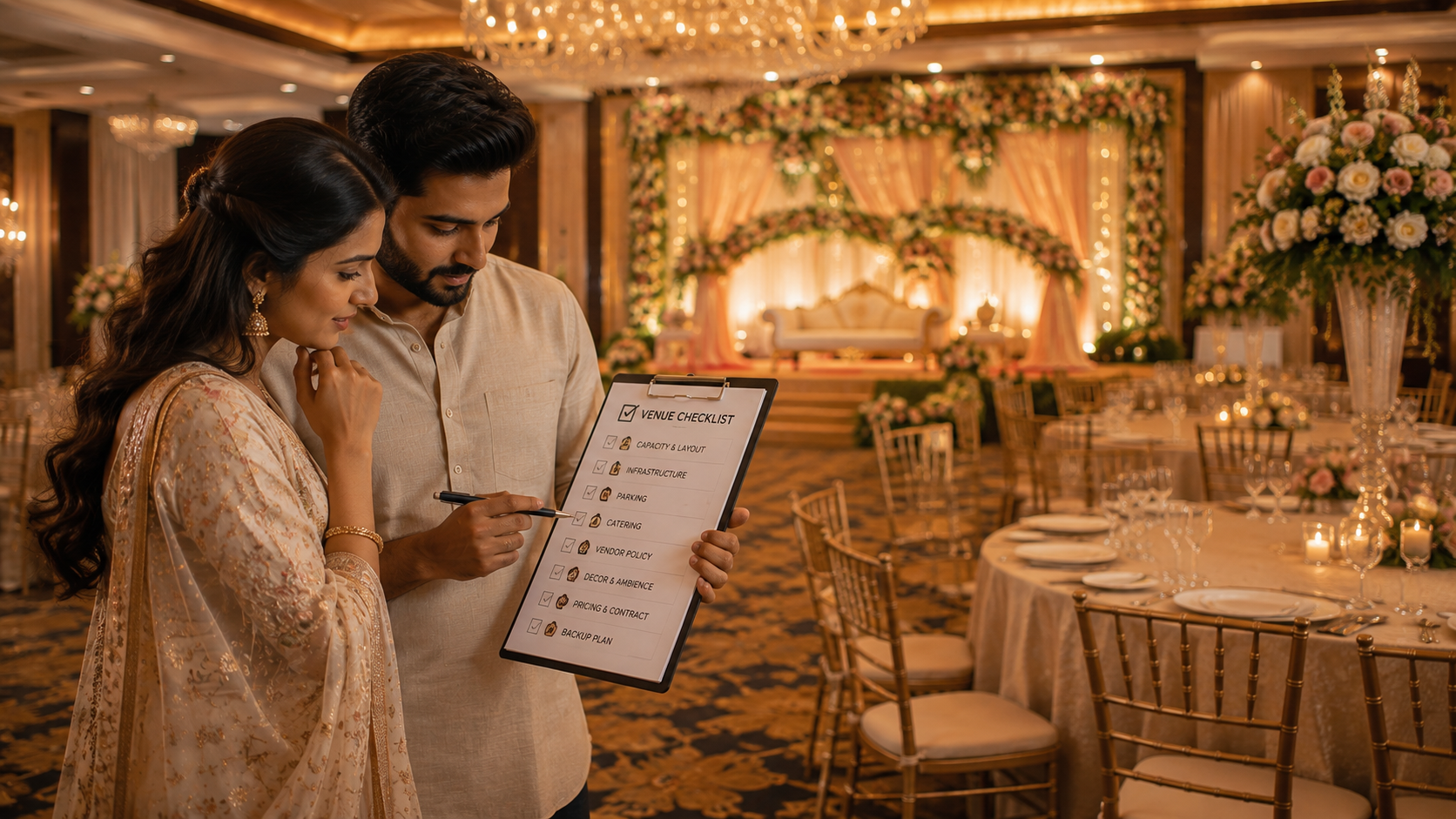
Walking through a beautifully presented wedding venue is an experience designed to generate enthusiasm. The coordinated lighting, the styled table settings, and the coordinator's confident descriptions of everything the space can offer are all doing exactly what they're intended to do: making you feel that this is the right place. The problem isn't the presentation. The problem is that the emotional response a good site visit generates is a poor guide to the operational reality of whether the venue will actually deliver on the wedding day.
A venue selection checklist exists to add a systematic evaluation layer alongside the emotional one. Couples who apply a consistent checklist across every venue they visit can compare properties on the same criteria rather than comparing impressions that don't translate meaningfully from one visit to the next. The venue that felt more exciting and the venue that checked more boxes often aren't the same one, and knowing which is which before the booking decision is made is what the checklist is for.
Here's what this blog covers: a category-by-category venue selection checklist you can use during every site visit, along with the specific questions that surface the information impressions alone won't reveal.
Check Capacity, Layout, and Space Suitability First
Capacity and layout checks come first because they determine whether a venue is fundamentally suitable for your wedding before any other evaluation is worth the time. A venue that photographs beautifully but can't comfortably accommodate your guest count, or that can't configure the space appropriately for the functions you're planning, doesn't improve with better infrastructure or more favourable contract terms.
Specific capacity and layout items to check during the site visit:
Ask for the comfortable seated dining capacity at your guest count rather than the maximum capacity, since venues quote maximum numbers that assume standing room and minimal décor
Walk the space specifically at your intended configuration: ceremony seating, a mandap or stage, dining tables, dance floor, and catering stations simultaneously, to check whether the space feels naturally suited to your format or whether something will need to compromise
Ask how the space is configured when multiple functions happen simultaneously, particularly if mehendi, sangeet, and reception are all planned at the same venue
Check the ceiling height relative to your lighting or décor ambitions, since low ceilings constrain installation options in ways that aren't apparent from floor-level inspection
Identify where the natural sightlines are and whether support columns, placement of service exits, or kitchen access create any sight-blocking issues for the ceremony or stage
Evaluate Infrastructure Before Falling for the Décor
Infrastructure is the category that most directly determines whether the wedding day runs smoothly, and it's the one most consistently under-evaluated during site visits because it's less visible and less emotionally engaging than the space itself. A venue with excellent infrastructure and modest décor will outperform a beautiful venue with unreliable power, inadequate parking, or poor sound management on the day when it matters.
Generator backup capacity is the check most families skip and most often regret. Ask specifically: what is the generator's KVA capacity, does it cover individual unit air conditioning alongside sound equipment, catering equipment, and event lighting simultaneously, and what is the switchover time if mains power is interrupted. A generator that handles common areas but not the main hall's full load is frequently misrepresented as "full backup."
Parking capacity needs to be verified against your actual expected vehicle count rather than accepted as sufficient based on general venue assurances. A guest list of 300 people arriving by car may generate 80 to 100 vehicles simultaneously, and a venue with parking for 40 cars creates a guest experience problem from the moment of arrival regardless of how the indoor experience unfolds.
For venues hosting multiple simultaneous events, check whether sound management is genuinely addressed through physical separation, acoustic treatment, or room boundaries, rather than relying on coordinated timing that depends on other bookings starting and ending exactly as planned.
What Is the Most Important Thing to Check When Choosing a Wedding Venue?
If one check has to take priority over all others, it's the complete cost of the venue relative to the initial quoted figure. The gap between what a venue appears to cost at the beginning of a conversation and what it actually costs after catering minimums, outside vendor surcharges, overtime rates, parking management, generator hire, and post-event cleaning are included is where most wedding venue regrets originate. Getting a complete, itemised cost picture, including every charge that might apply to your specific event, confirmed in writing before any commitment is made is the single check that most directly determines whether the venue delivers what you expected.
Check Catering and Vendor Policies in Detail
Catering and vendor policies carry significant financial and logistical implications that are consistently underestimated during the enthusiasm of a site visit but become very concrete in the cost calculation and in vendor coordination planning.
In-House vs Outside Catering
Ask directly: is the venue's in-house catering mandatory for all food and beverage, or are outside caterers permitted? If outside catering is permitted, are there restrictions on caterer selection, and what kitchen access and equipment is available to them? Mandatory in-house catering removes your ability to use a caterer you've worked with before or whose food you specifically want, and the quality difference between venue catering and a carefully chosen outside caterer can be significant.
Vendor Access and Restrictions
Ask which vendor categories require venue-approved partners versus which are fully open to outside choices. Decorators, photographers, audio-visual technicians, and entertainment providers may each have different restriction levels, and surcharges for outside vendors in any restricted category add to the total event cost in ways not visible in the initial venue quote.
Minimum Spend Requirements
Some venues apply a minimum spend on food and beverages that applies regardless of actual guest consumption. Ask specifically what this minimum is, how it's calculated, and what happens if actual spend falls short. This requirement can shift the economics of a venue significantly from what the rental fee alone suggested.
What's Included vs What's Additional
Request a complete itemised list of what the quoted venue hire includes and what's billed separately. Security, housekeeping, parking management, power backup, linen, basic furniture, cutlery, and flowers each may or may not be included, and the difference between venues on these inclusions often explains apparent pricing differences that seem counterintuitive when only the headline rental is compared.
Review Contract and Pricing Terms Before Any Commitment
The contract review is not a formality that happens after the decision is made. It's where the decision gets confirmed or reconsidered based on what the written terms actually say versus what was communicated during the site visit. Several specific terms deserve careful attention before any signing:
Cancellation policy terms: what percentage of the paid amount is retained at different cancellation windows, whether a date change carries a fee or depends on alternate date availability, and what constitutes an eligible reason for a fee waiver. These terms vary significantly between venues and become very relevant if circumstances change.
Overtime charge rates: the per-hour or per-function extension cost when the event runs beyond the contracted time, which happens in most weddings and is almost never anticipated in the initial budget. Ask what the rate is and whether overtime is automatically applied or requires prior approval.
Damage deposit conditions: the amount held, the scope of what can be deducted from it, and the timeline within which the assessment and return happen after the event.
Venue By Choice helps couples compare venues systematically against exactly these checklist criteria across multiple properties, making it considerably easier to evaluate venues on equivalent terms rather than managing different information from different site visits independently. Their listings and comparison tools are available at venuebychoice.com.
How Many Venues Should I Visit Before Booking?
The practical answer is enough to have a genuine comparison, which for most couples is three to five venue visits before committing:
One or two venue visits are rarely enough to have a genuine sense of what the market offers at your budget and location preference, and committing after a single visit is the scenario most likely to produce buyer's regret when a better option is discovered later
Three to five visits provide enough comparison to make a well-informed choice without the diminishing returns of visiting many more, since beyond five visits the differences between venues tend to blur rather than clarify
Visiting in a deliberate sequence from lower to higher preference helps calibrate expectations: seeing a venue you're less enthusiastic about first makes it easier to evaluate more preferred options accurately rather than comparing everything to the first venue seen
A second visit to the top one or two choices after initial site visits is worth scheduling before the final decision, since a second visit with the contract in hand and checklist complete changes what you notice compared to the emotionally engaged first visit
Conclusion
A venue selection checklist transforms the site visit from an emotional experience into a structured evaluation, which is what makes comparing multiple venues meaningful rather than impressionistic. Checking capacity and layout suitability, infrastructure reliability, catering and vendor policies, and contract terms systematically across every venue visit produces a decision based on what the venue will actually deliver rather than how it felt to walk through on a good day.
The couples who are most satisfied with their venue choice typically made it after applying exactly this kind of structured evaluation rather than booking on the strength of a single enthusiastic visit. The checklist doesn't remove the excitement of the process. It makes sure that excitement is well-placed.