How Festival Season Affects Wedding Venue Availability and Pricing
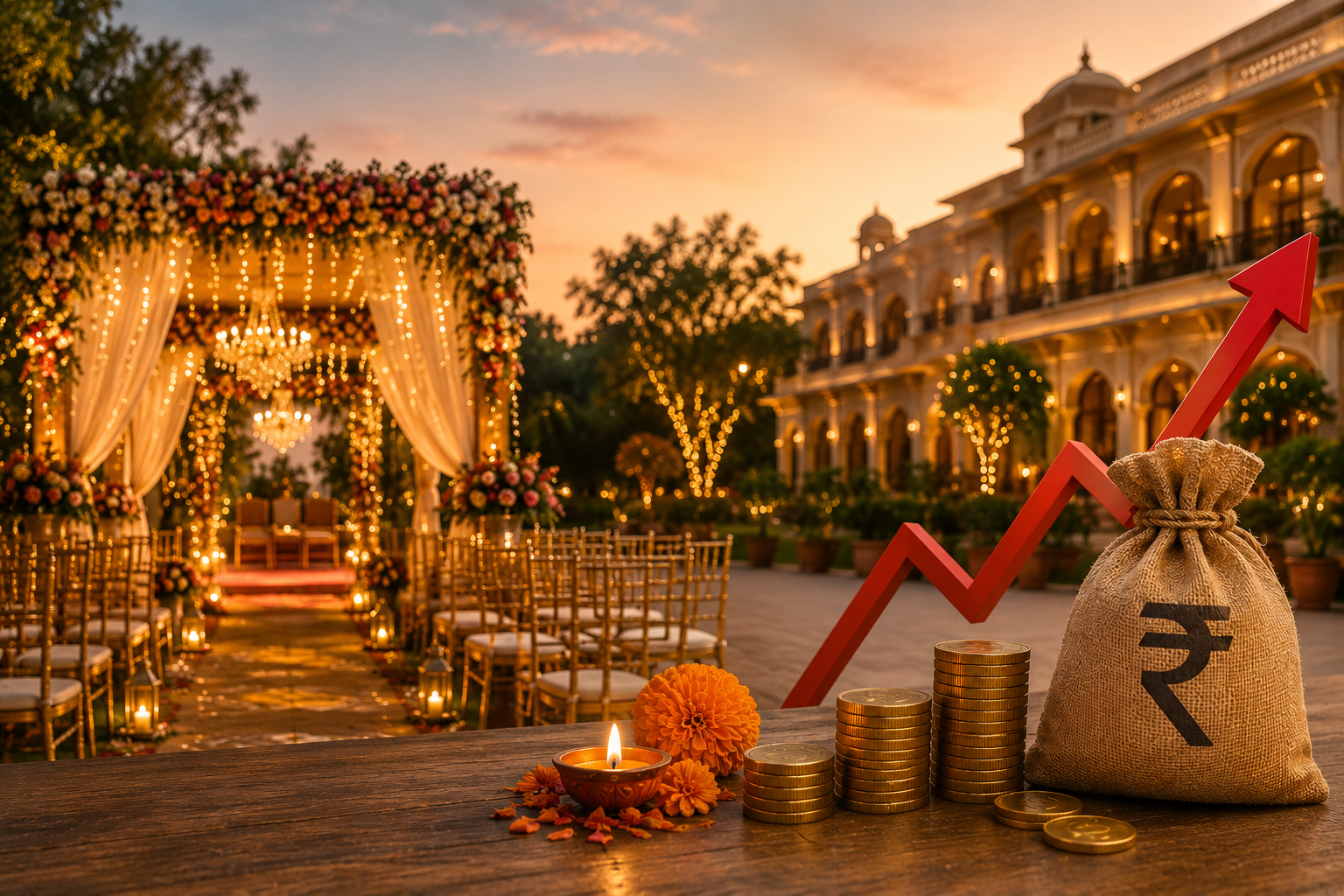
Wedding venue planning during festival season operates on a logic that catches many families off guard when they begin planning: the most desired wedding dates aren't evenly distributed across the calendar but concentrated into narrow windows immediately following major festivals, and those narrow windows are exactly where venue availability collapses first and pricing climbs highest. Understanding this dynamic before choosing a date can make a significant difference to both what venues are accessible and what the total wedding budget ends up being.
The challenge for most couples and families is that the decision about when to get married often feels culturally determined by auspicious dates, family calendars, and festival timing, rather than by a strategic assessment of the venue market. Both considerations are legitimate, but treating them separately rather than together means many families discover the pricing and availability implications of their preferred date only after they've already committed to it emotionally and socially.
This blog answers those questions with a clear breakdown of how the festival calendar shapes venue availability, what peak-season pricing actually looks like, and how to plan effectively within these market realities.
How India's Festival Calendar Creates Wedding Venue Demand Spikes
The connection between festivals and wedding venue demand isn't arbitrary. In Hindu wedding planning, auspicious muhurats are determined by the panchang, the traditional almanac that identifies favourable dates and times for major life events. A significant proportion of the most auspicious muhurats fall in the months immediately following the major autumn and winter festivals: after Navratri and Dussehra, after Diwali, and after Makar Sankranti in January.
This creates a specific market pattern that repeats every year. The period immediately during a major festival, Navratri, Diwali, or Holi, is typically a blackout for wedding functions, since families are occupied with the festival itself. The moment the festival ends, the auspicious date window opens and the pent-up demand for wedding dates hits the venue market simultaneously. Venues that had relatively stable pricing and availability four weeks earlier suddenly face enquiries from dozens of families all targeting the same narrow post-festival window.
The intensity of this spike varies by region and community. North Indian and Gujarati wedding traditions follow the festival calendar particularly closely, making the post-Navratri and post-Diwali windows extremely competitive in cities like Delhi, Mumbai, and Ahmedabad. South Indian communities working from different panchang traditions experience similar demand concentration but at different points in the calendar. Understanding which festival windows are most relevant to your own community's traditions is the first step in anticipating how venue availability will behave around your preferred dates.
Understanding Wedding Venue Pricing Across the Year
Wedding venue pricing isn't a fixed rate that venues simply quote. It's a dynamic figure that reflects the balance between supply and demand at the specific time a booking is being made.
Peak Season: October Through December
This is the highest-demand period in the Indian wedding venue market nationally, driven by the concentration of auspicious dates immediately following Navratri, Dussehra, and Diwali. Premium venues in major cities consistently price this window at their highest annual rates, and on particularly popular muhurat dates within this period, some venues command a further premium on top of their standard peak-season pricing. Availability at top venues is limited across this whole stretch and disappears earliest for the best-known dates.
Secondary Peak: February
February holds a distinct secondary demand spike driven by the concentration of auspicious winter wedding dates and the proximity to Valentine's Day in urban markets that have adopted that date as a weddings reference point. Pricing in February is typically lower than the October to December peak but noticeably higher than the surrounding months, and venue availability at popular properties can be surprisingly tight given that it sits outside the main wedding season perception.
Shoulder Season: January and March
January and March occupy an interesting middle position. January carries some strong muhurat dates post-Makar Sankranti, and demand is moderate. March's auspicious window before Holi produces another brief demand concentration, but pricing generally sits below the peak months. These months offer a genuine opportunity for families who have flexibility on exact dates to access better pricing without fully committing to off-peak timing.
Off-Peak Season: April Through September
April through September represents India's monsoon and summer months, which carry far fewer auspicious wedding dates in most traditions and also face practical challenges from heat and rain. Pricing in this window is typically the lowest of the year for venue hire, and availability is considerably more flexible. Families with specific off-peak muhurat dates or who are planning weddings outside traditional Hindu calendar conventions can access significantly better value during this stretch, though vendor pricing and accommodation rates follow the same seasonal pattern, making savings on the venue less transformative than they might appear in isolation.
When Is the Cheapest Time to Book a Wedding Venue in India?
The cheapest time to book is the off-peak summer and monsoon season, April through September, when venue demand is lowest and negotiating leverage is highest. Within this window, mid-week dates carry lower pricing than weekends even in off-peak months, since weekend availability is still in higher demand relative to the quieter weekday calendar.
For families committed to auspicious muhurats in traditional wedding seasons, the most cost-effective approach is targeting shoulder-season dates in January or March rather than the October to December peak window. The muhurat quality on these dates is equivalent from a panchang perspective, but the venue and vendor pricing is noticeably more favourable, and availability is meaningfully less constrained.
How Festival Periods Affect More Than Just the Venue
Festival season pricing affects the total wedding budget through several cost lines simultaneously, which means the venue saving or premium represents only part of the financial picture:
Vendor pricing: decorators, photographers, caterers, and entertainment providers who work festival events often carry elevated rates into the weeks immediately following major festivals, compressing the post-festival wedding window from a vendor availability perspective alongside the venue availability constraint
Hotel and accommodation rates: outstation guests attending a festival-season wedding face hotel room rates that follow the same seasonal pattern as venue pricing, compounding the total cost of attendance for families with significant outstation guest lists
Flight and travel costs: major cities see elevated travel costs around festival periods, affecting families who are coordinating guests arriving from different locations
Vendor availability: the decorators and coordinators in highest demand book out their post-festival calendars months ahead, meaning late-stage enquiries for October to December weddings face both higher pricing and limited availability among the best-regarded vendors
The Strategy Debate: Book Before or After the Festival?
Families planning festival-season weddings consistently face a version of the same decision: booking a date immediately before the festival, accepting that the date may not carry the most auspicious muhurat, or waiting for the post-festival window with its stronger auspicious dates but higher demand and pricing.
The before-festival strategy makes most sense for families with flexibility on muhurat timing, those prioritising venue and vendor access over precise date auspiciousness, or those working with a tighter budget that post-festival pricing would strain. The post-festival strategy suits families for whom the specific auspicious date carries genuine cultural or religious significance that flexibility can't substitute, and who are prepared to book well ahead, twelve to eighteen months, to secure their preferred venue at any price point.
Neither strategy is universally correct. The right answer depends on the relative weight a family places on date auspiciousness versus venue choice versus budget. Venue By Choice helps families work through exactly these timing trade-offs across different venue options, making it easier to see what's available and what it costs at different points in the festival calendar rather than discovering the market reality only after a date decision has been made. Their listings are available at venuebychoice.com.
How Far in Advance Should I Book for a Festival Season Wedding?
Lead times vary meaningfully based on season and date preference:
October to December planning for peak-season weddings on popular muhurat dates: twelve to eighteen months ahead is the practical minimum for premium venues in major cities; six to eight months ahead risks finding preferred dates already taken
February secondary peak weddings: eight to twelve months ahead provides adequate lead time for most markets; six months is the practical minimum for popular dates
January and March shoulder-season weddings: six to eight months is generally sufficient, with some flexibility possible at popular venues even at four to five months for less sought-after date combinations
Off-peak April to September weddings: three to six months is typically adequate for most venues during the low-demand period, with some negotiating leverage remaining even at shorter lead times
Multi-venue or resort weddings in any season: add two to three months to the above timelines since multi-day bookings require more coordination and the best multi-function properties book faster than standalone venues
Conclusion
Wedding venue availability during festival season follows a predictable pattern once the festival calendar's effect on muhurat concentration is understood: demand spikes narrow post-festival windows, pricing rises with that demand, and the families who plan earliest within those windows consistently have the most choices at the best price points. Understanding this mechanism before choosing a date allows couples and families to make an informed trade-off between timing preferences and venue and budget realities rather than discovering the constraint after the social commitment has already been made.
The festival calendar is fixed. The venue market responds to it the same way every year. What changes from family to family is how early they begin navigating that reality, and that timing, more than almost any other single planning decision, determines how much choice they ultimately have.