
Reception Hall with Catering: How to Choose a Venue That Gets Food and Hospitality Right
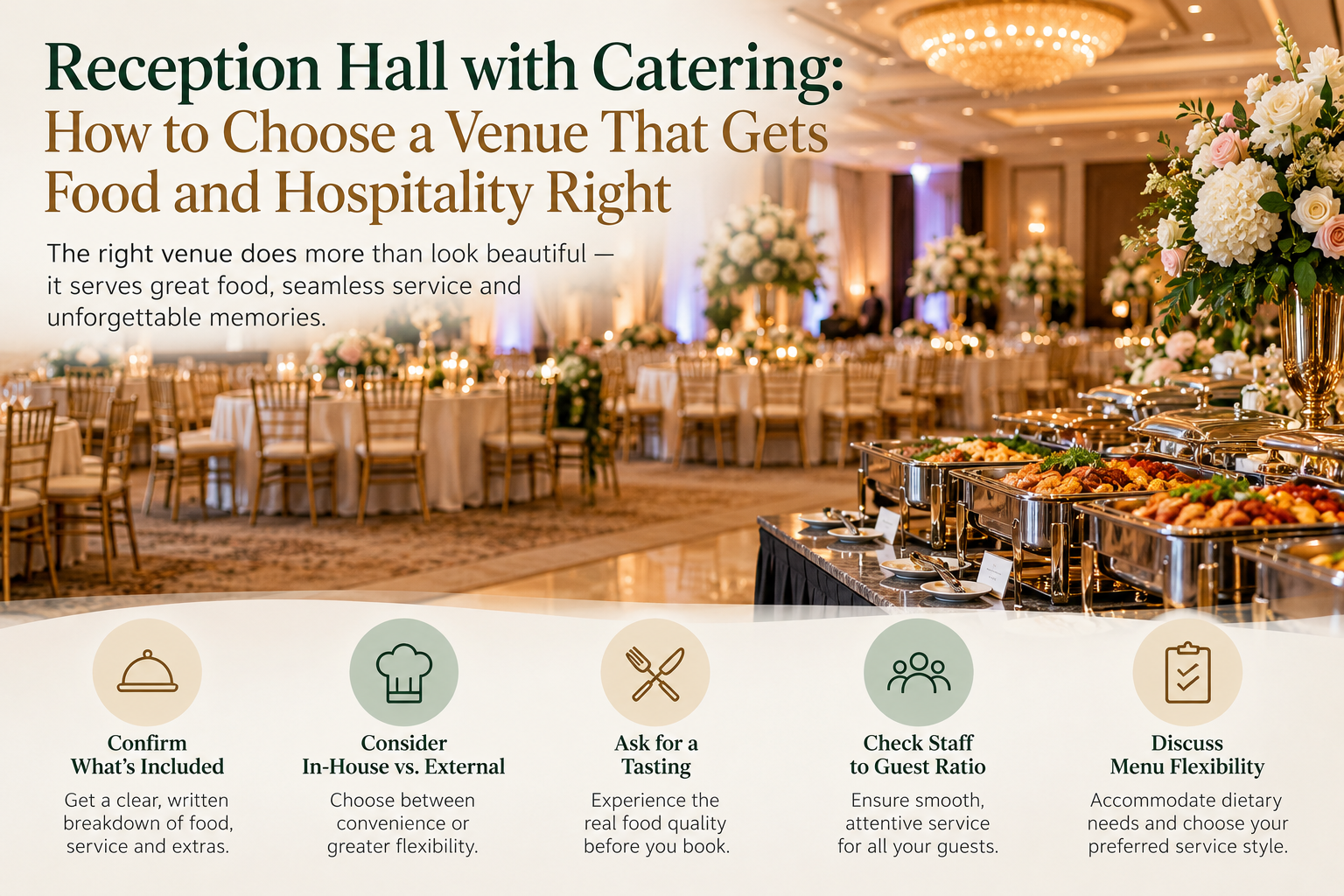
Choosing a reception hall with catering means making two decisions at the same time. The venue creates the setting; the food and service are what guests remember months later. Getting both right, from the same source, requires more than browsing a gallery of hall photographs and confirming the date is available.
Most couples spend their shortlisting energy on décor, location, and price. Catering tends to get treated as something that will sort itself out once the venue is booked. The problem is that food quality and service delivery are the hardest things to assess from a website or a site visit, and the easiest to get wrong. By the time a problem becomes visible, the contract is already signed.
In this blog, we cover what to look for and what to ask before you book a reception hall with catering, so the experience on the day matches everything you imagined during the planning.
What Does a Reception Hall with Catering Actually Include?
This is the question most couples forget to ask directly, and it tends to cause the most confusion later. Not all catering-inclusive packages are equal. Some venues include only the food preparation; others bundle in service staff, table linen, crockery, glassware, cake-cutting service, and post-event cleanup. Two packages quoted at similar prices can look very different once you see what each one actually covers.
Understanding the structure matters. In-house catering means the venue's own kitchen and team handle the food, with catering and event management operating under the same roof and often the same management. This is different from a venue that works with a list of approved external caterers, where you choose from their panel and a separate contract is involved.
Before you interpret any quoted price, ask for a written line-item breakdown. What is included? What is charged separately? Is there a service fee, a per-plate charge above the minimum, or a surcharge for specific cuisine styles? Getting these answers upfront is the most straightforward way to compare venues accurately.
In-House Catering vs. Bringing Your Own Caterer
Couples searching for a banquet hall with catering will encounter both models, and the right choice depends on what matters more to you: flexibility or convenience.
A venue with in-house catering gives you a single point of contact. The kitchen is already on-site. The serving staff knows the floor plan, the event timeline, and how the space fills once guests arrive. Catering and event management teams are working from the same brief, which tends to reduce friction on the day itself. When something needs adjusting mid-event, there is one team to speak to, not two vendors coordinating across a phone call.
Bringing your own caterer offers more flexibility, particularly if you have a preferred chef, a specific regional cuisine in mind, or dietary requirements easier to manage with a specialist. The trade-off is coordination. An external caterer is working in an unfamiliar kitchen, may face access and timing restrictions set by the venue, and adds a second vendor relationship into a day that is already logistically complex. For large weddings and multi-family receptions, that added layer is worth thinking through carefully before choosing it.
Five Things to Evaluate Before You Book
Visiting a venue and liking the hall is a good starting point. It is not a reason to sign the contract. Before you book any reception hall with catering, these are the things worth pressing on:
Does the Venue Offer a Tasting?
A reputable catering-inclusive venue will offer couples the opportunity to taste the menu before confirming the booking. This is not a luxury or a perk. It is the single most reliable way to evaluate real food quality rather than relying on what photographs well on a venue's website. If a venue is reluctant to arrange a tasting or charges a significant fee for one, that tells you something.
How Flexible Is the Menu?
Ask whether the kitchen accommodates dietary needs such as vegetarian, Jain, vegan, and diabetic guests. Ask whether you can choose between service styles, a multi-cuisine buffet, live cooking stations, or a sit-down plated course. And ask whether the chef or catering manager will sit with you to discuss preferences, or whether you are working from a fixed menu with no room for adjustment.
What Staff-to-Guest Ratio Does the Venue Maintain?
Service quality at a large reception depends on having the right number of people on the floor. Under-staffed events result in food stations running low, guests waiting in long queues, and a pace that slows down when it should be flowing smoothly. Ask specifically what ratio of serving staff to guests the venue commits to, and whether that number adjusts for larger guest counts.
What Is Included in the Catering Package?
Request a written breakdown. Table linen, crockery, glassware, cutlery, napkins, cake-cutting service, and post-event cleanup are often assumed to be included but sometimes are not. Knowing exactly what is and is not in the package prevents surprise additions on the final invoice and helps you compare venue quotes on equal terms.
What Makes Hospitality Stand Out at a Wedding Reception?
Food quality and service quality are two separate things, and both need to hold up across a multi-hour event, not just the first half hour. The question worth asking is not only whether the food will be good, but how it will be delivered from setup through to the last guest leaving.
What separates genuinely good wedding reception catering services from the merely adequate comes down to coordination and attentiveness. How well does the catering team communicate with the event management team? Are food stations maintained and replenished throughout the evening, or do they look depleted by the time half the guests have eaten? Is there someone on the floor whose job it is to notice when something needs adjusting, before a guest has to point it out?
Presentation is part of this too. How food is arranged, the quality of the buffet or plating setup, and the condition of the stations at the end of service all contribute to the overall impression. The best way to assess this before booking is to ask for references from recent couples and read reviews that speak specifically to food and service, not just the venue's appearance.
Conclusion
Choosing the right reception hall with catering comes down to asking the right questions before you fall in love with the hall itself. Food tasting opportunities, menu flexibility, clear package inclusions, appropriate staffing, and a well-coordinated team are the factors that determine whether the day actually delivers on what couples spent months planning.
The most memorable receptions are the ones where the food feels considered and the service feels effortless. That does not happen by accident. It comes from choosing a venue where catering is treated as a core offering rather than an afterthought, and where the team can show you, before you sign anything, that they have done this well before.