
Questions to Ask Before Booking a Wedding Reception Venue
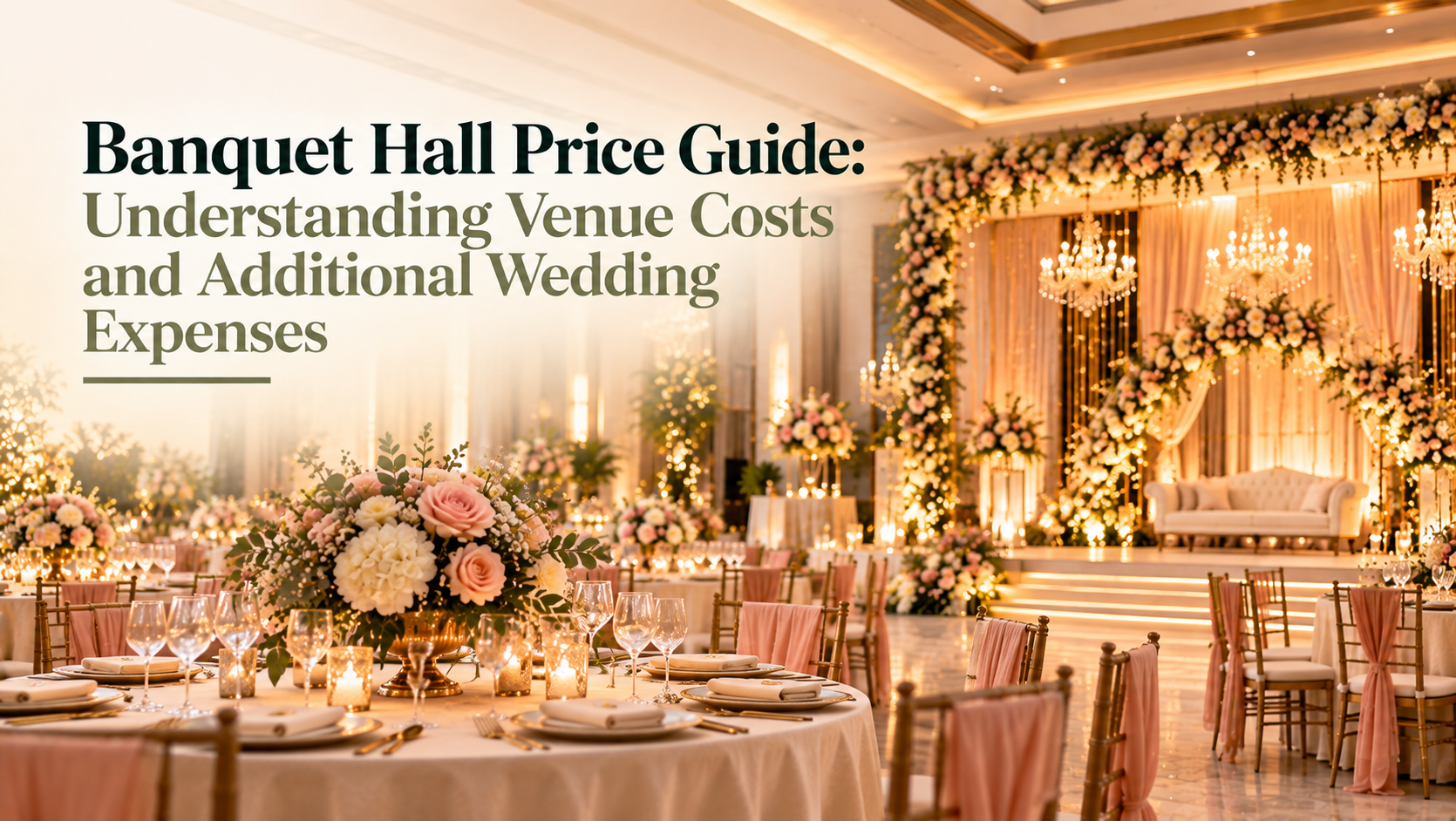
A banquet hall price guide can help couples and families understand how much to budget for a wedding venue, catering, décor and other reception expenses. While some venues offer a combined package, others charge separately for the hall, food, decorations and additional services. Understanding these pricing structures makes it easier to compare options and choose a venue that fits your budget.
Wedding expenses can increase quickly when smaller charges are overlooked. The key is to look beyond the advertised price and calculate the complete cost of hosting your expected number of guests. This guide explains the main venue pricing models, common package inclusions and additional expenses to consider before booking.
1. How Much Does a Banquet Hall Cost?
The cost of a banquet hall depends on several factors, including its location, capacity, facilities, event date and the services included in the quotation. A community hall, a standalone banquet venue and a luxury hotel ballroom can have very different pricing structures.
Most venues follow one of three models:
Fixed hall rental: You pay a set fee for using the venue for an agreed period. Catering and décor may be arranged separately.
Per-plate pricing: The venue charges according to the number of meals, often combining catering with access to the banquet space.
Combined packages: A single quotation covers selected services, which may include the hall, catering, furniture and basic lighting.
For example, a venue charging ₹1,000 per plate for 300 guests would have a base catering cost of ₹3 lakh, before any applicable taxes or additional charges. If the package also includes the hall, compare that total with venues charging separate rental and catering fees.
Prices can also change during peak wedding seasons, on popular dates and at venues with higher demand. Treat online estimates as starting points and request a current quotation for your preferred date.
2. What Do Wedding Venue Packages Usually Include?
Wedding venue packages can simplify planning by bringing several services together under one agreement. However, the word "package" does not mean every service is included. Two venues with similar advertised prices may offer very different levels of service.
Common inclusions can include:
Hall access for a specified number of hours.
Tables, chairs and basic seating arrangements.
Catering and standard food service.
Basic lighting and sound facilities.
A stage or a simple backdrop.
Cleaning and venue staff during the event.
Some packages may also include parking assistance, changing rooms or basic decorations. Premium floral arrangements, elaborate stage designs, entertainment systems and accommodation may cost extra.
Before booking, request an itemised list of inclusions and exclusions. Confirm the guest-count guarantee, minimum spending requirement and permitted event duration. Ask whether you can bring your own caterer, decorator or photographer, and whether outside vendors attract additional fees.
A package is worth considering when its included services match your requirements. Paying for services you do not need may be less economical than choosing a simpler venue and arranging selected extras independently.
3. What Additional Wedding Expenses Should You Budget For?
The advertised venue price is only one part of the wedding budget. Several additional expenses can affect the final amount, so it is useful to identify them before signing the booking agreement.
Décor and entertainment
Floral arrangements, stage backdrops, entrance decorations, decorative lighting and themed installations can increase costs. DJs, live performers, special sound equipment and photography setups may also require separate arrangements.
Ask the decorator for a detailed quotation covering materials, labour, installation and dismantling. Check whether the venue charges extra for outside decorators or restricts certain installations.
Catering upgrades
The standard menu may not include every item you want. Live food counters, premium desserts, additional beverages and customised menus can increase the per-plate rate. A minimum guest guarantee may also mean paying for a specified number of meals even if fewer guests attend.
Confirm the final menu, service timings and guest-count deadline with the caterer.
Taxes and operational charges
Depending on the venue and agreement, additional charges may apply for taxes, service, cleaning, security, electricity, generator usage or extended hours. Parking and accommodation can add to the overall expense as well.
Ask for each applicable charge to be clearly listed. Do not assume that a facility is complimentary simply because it is available at the venue. Wedding budgeting guides also recommend checking vendor fees, overtime charges and minimum commitments before comparing quotations.
4. How Can You Compare Banquet Hall Rental Costs?
Comparing quotations becomes easier when every venue is evaluated against the same requirements. A lower rental price does not necessarily mean a lower overall cost if essential services are billed separately.
Use this simple comparison process:
Fix your guest count. Estimate attendance realistically before requesting quotations.
Standardise the requirements. Ask each venue to quote for the same date, event duration, menu and approximate number of guests.
List every inclusion. Separate the hall rental, catering, furniture, décor and optional services.
Check additional charges. Confirm applicable taxes, deposits, overtime fees and vendor restrictions.
Calculate the total. Compare the amount payable for the complete event, not just the starting price.
Review the contract. Read the payment schedule, cancellation terms, refund conditions and rules for changing the guest count.
For example, Venue A might charge ₹80,000 for the hall and require separate catering, while Venue B offers a higher combined price that includes meals and basic furniture. The cheaper headline rental may not be the more affordable option once all required services are added.
5. How Can You Choose a Venue That Fits Your Wedding Budget?
Start by deciding how much of your overall wedding budget can reasonably go towards the venue and reception. Include catering, décor, entertainment and other event-related expenses before deciding on a maximum booking amount.
Next, prioritise the features that matter most to your family. Guest capacity, convenient location, parking, accessibility and suitable facilities may be more valuable than elaborate decorations or premium upgrades.
Consider alternative dates or event timings if your schedule allows. Ask whether a simpler package is available, and remove optional services that do not contribute meaningfully to the celebration. If you plan to hire independent vendors, compare their full costs with the venue's in-house options before making a decision.
Venue By Choice provides a starting point for exploring wedding venues and comparing options for your celebration. As you shortlist venues, request clear quotations and confirm the details directly with each venue before making a payment.
Plan Your Venue Budget With Confidence
A well-planned banquet hall budget accounts for more than the rental fee. Understanding pricing models, checking package inclusions and allowing for additional expenses helps couples and families avoid unpleasant surprises and make informed booking decisions.
Use this banquet hall price guide as a starting point when comparing venues, then build your budget around your guest count, priorities and confirmed quotations. With careful planning and clear communication, you can choose a wedding venue that suits your celebration without losing sight of your financial limits.