
Non-Veg Wedding Catering: What Should You Include in the Menu?
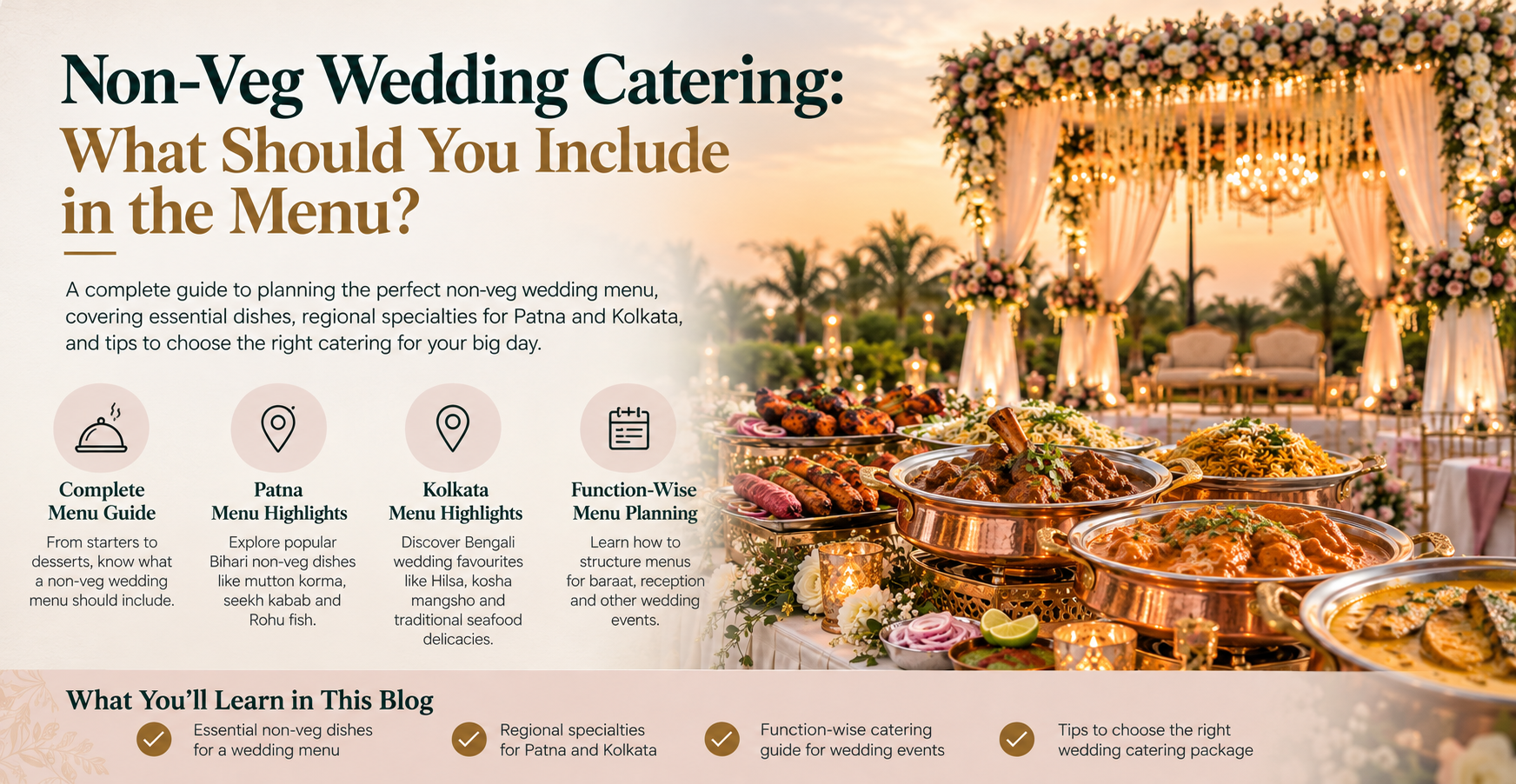
Non-veg wedding catering in Eastern India isn't simply a matter of including meat and fish alongside the vegetarian spread. In both Patna and Kolkata, the non-vegetarian courses are culturally central to the wedding meal rather than an optional supplement, and the specific preparations expected vary significantly between these two cities in ways that reflect their distinct culinary traditions. A Bihari wedding in Patna where the mutton korma is missing or where the fish course is overlooked will be remembered for the wrong reasons. A Bengali wedding in Kolkata where Hilsa is absent or where the kosha mangsho hasn't been prepared with adequate care produces the same outcome. Regional menu knowledge is as important as catering quality for delivering a wedding meal that genuinely satisfies the guests it's designed for.
The starting point for non-veg wedding catering planning is understanding that the menu is both a practical matter of feeding a large number of people well and a cultural expression of hospitality that carries specific expectations depending on the community, the city, and the family traditions being honoured.
Here's what this blog covers: what a complete non-veg wedding menu should include, the specific menu expectations for weddings in Patna and Kolkata, and how to structure the catering across different wedding functions.
What a Complete Non-Veg Wedding Menu Should Cover
A complete non-vegetarian wedding menu follows a structure that balances variety, cooking technique diversity, and the guest experience across a multi-hour event. The basic architecture of any complete non-veg wedding catering includes live starter counters where guests arrive and have access to hot non-veg starters, a main course that spans multiple preparation styles, supporting dishes including bread, rice, and accompaniments, and dessert. The non-veg main course specifically should cover at least one red meat preparation, one chicken preparation, and a fish or seafood course at a minimum for any wedding where the guest list's expectations include a proper non-veg spread.
Beyond this baseline structure, the regional culinary traditions of the wedding's location determine which specific dishes fill each course, what cooking techniques are expected, and in some communities, which preparations are culturally associated with wedding celebrations rather than everyday cooking.
Non-Veg Wedding Menu for Patna: What Guests Expect
Patna wedding catering carries the influence of Bihari cuisine alongside Mughal-era cooking traditions that have produced a robust, spice-forward approach to meat and fish preparation that wedding guests expect to encounter in their full elaborateness rather than in simplified versions.
Starters and Welcome Snacks
Patna wedding starters typically include seekh kabab and shammi kabab as the primary non-veg welcome items, both roasted over coal or in a tandoor for the characteristic smoky depth that defines these preparations at their best. Chicken tikka at a live counter is now standard at most Patna wedding receptions. The quality of the starters, how fresh, how hot, and how authentically spiced, sets the guest's expectation for the meal that follows.
Main Course Meat Preparations
Mutton korma, slow-cooked in a rich onion, yoghurt, and whole-spice base, is the prestige preparation at a Patna wedding main course and the dish around which the rest of the non-veg spread is anchored. Chicken curry in a different style, typically a drier, more intensely spiced preparation than the mutton, provides contrast rather than competition. Some families include keema dishes or nihari for the baraat reception specifically, where a heavier, more elaborate spread is customary.
Fish and Seafood in Bihari Wedding Menus
Fish preparations at Patna weddings often feature Rohu, the freshwater fish that is central to Bihari fish cooking, prepared in a mustard-based gravy or as fish fry. The fish course is important rather than optional at most non-veg weddings in the Patna region, and its absence is noticed by guests who expect a proper spread to include it.
The Bihari Wedding Feast: Function-Wise Menu Approach
Patna weddings commonly differentiate the baraat welcome menu from the main reception spread, with the baraat catering typically more elaborate and featuring the prestige preparations that signal the family's hospitality to the groom's party. Having a designated function-wise menu strategy rather than serving the same spread across all wedding events is standard in Patna wedding culture.
Non-Veg Wedding Menu for Kolkata: The Bengali Wedding Spread
Kolkata wedding catering is one of the most distinctive regional wedding food cultures in India, with specific preparations that carry cultural weight beyond their role as menu items and that guests will evaluate with genuine connoisseurship.
The Non-Negotiable Fish Course
Hilsa (Ilish) in some form is culturally central to a proper Bengali wedding spread when the season and supply allow. Shorshe Ilish (Hilsa in mustard gravy), Ilish Paturi (Hilsa in banana leaf), or Ilish Bhapa (steamed Hilsa) each has its advocates and its appropriate function context. Chingri Malai Curry, prawns in coconut milk gravy, is the second prestige seafood preparation and appears at most mid-range and premium Kolkata wedding menus. Fish fry as a starter is a Kolkata wedding institution that almost no reception omits.
Mutton and the Kosha Mangsho Tradition
Kosha Mangsho, the slow-cooked, intensely reduced dry mutton preparation whose colour and texture signal the hours of cooking invested in it, is Kolkata wedding cooking at its most iconic. It is both the preparation that defines a Bengali non-veg wedding spread and the one most likely to be compared critically by guests who have eaten it at many weddings before. The quality of the kosha mangsho is a direct reflection of the caterer's skill and the family's insistence on doing it correctly, and it warrants specific conversation with the catering team rather than being assumed from a general menu agreement.
Kolkata Biryani and the Mughal Influence
Kolkata biryani, with its characteristic potato addition and lighter, more fragrant rice than Hyderabadi alternatives, is now standard at most Kolkata wedding receptions and functions as a comfort course that bridges the formal wedding meal and the later informal eating. Chicken rezala, a white gravy Mughal-influenced preparation, appears on many Kolkata wedding menus as an alternative non-veg option for guests who prefer lighter preparations alongside the richness of kosha mangsho.
How Many Non-Veg Dishes Should Be on a Wedding Menu?
For a mid-range wedding with a 400 to 600 person guest list expecting a complete non-veg spread, a minimum of four to five distinct non-veg preparations is appropriate: two meat preparations (one red meat, one chicken), one fish or seafood preparation, one starter category, and a biryani or rice-based non-veg component. Premium weddings and large guest lists support six to eight non-veg preparations without repetition. The guiding principle is variety across cooking technique and protein type rather than quantity for its own sake: four well-executed, varied preparations satisfy more than eight mediocre ones.
How to Plan Non-Veg Catering Across Multiple Wedding Functions
Repeating the same non-veg preparations across multiple wedding functions wastes the opportunity to give guests a varied experience and risks guest fatigue with preparations that were impressive at the first function. A practical function-wise non-veg menu allocation:
Mehendi or haldi function: lighter non-veg starters and snacks rather than a full main course spread, since these are typically daytime or early evening functions with a snacking rather than dining format
Sangeet or evening pre-wedding function: live non-veg starter counters as the primary non-veg component, with a lighter sit-down element if a meal is served
Baraat welcome: the prestige non-veg preparations including the signature meat course, since this is where the most elaborate hospitality is culturally expected
Main reception: the full non-veg spread covering all courses, including the fish course, meat preparations, and biryani component
Venue By Choice helps couples find wedding venues in Patna and Kolkata whose catering infrastructure supports the regional non-veg wedding menu expectations described above, whether through in-house catering teams familiar with local traditions or through venue access that permits bringing specialised outside caterers. Their venue listings are available at venuebychoice.com.
Should I Have Both Veg and Non-Veg Options at an Indian Wedding?
Yes, regardless of the family's preference for a primarily non-veg menu, maintaining a parallel vegetarian offering is strongly advisable for most Indian weddings:
Guest lists at Indian weddings almost always include some vegetarian guests, whether for religious, personal, or health reasons, and the absence of adequate vegetarian options creates a poor guest experience for this segment
The vegetarian spread should be genuinely complete rather than a token offering alongside the non-veg emphasis: dal, two vegetable preparations, paneer, and appropriate breads and rice constitute a minimum vegetarian main course
For Kolkata weddings specifically, a complete vegetarian spread including Bengali vegetarian preparations is appropriate since some guests may prefer vegetarian options even at a predominantly non-veg celebration
For Patna weddings, the balance often tilts more heavily toward non-veg given the region's culinary culture, but lentil preparations and vegetable curries should still be available and well-prepared rather than treated as an afterthought
Conclusion
Non-veg wedding catering in Patna and Kolkata is most successful when it reflects the specific regional culinary traditions that guests bring their expectations from: the mutton korma and fish traditions of Bihari wedding culture for Patna, and the kosha mangsho, Hilsa, and Kolkata biryani standards of Bengali wedding catering for Kolkata. The preparations that carry cultural weight in each city require specific attention from the catering team and specific conversation at the menu planning stage rather than being assumed from a generic wedding catering package.
The wedding meal is the most sustained hospitality experience guests have at any celebration, and the family's investment in getting the non-veg preparations right in their regional and cultural specificity is an investment in the memory that guests carry from the event rather than just in the food they consume during it.