
7 Reasons to Choose a 500-Capacity Banquet Hall for Your Wedding
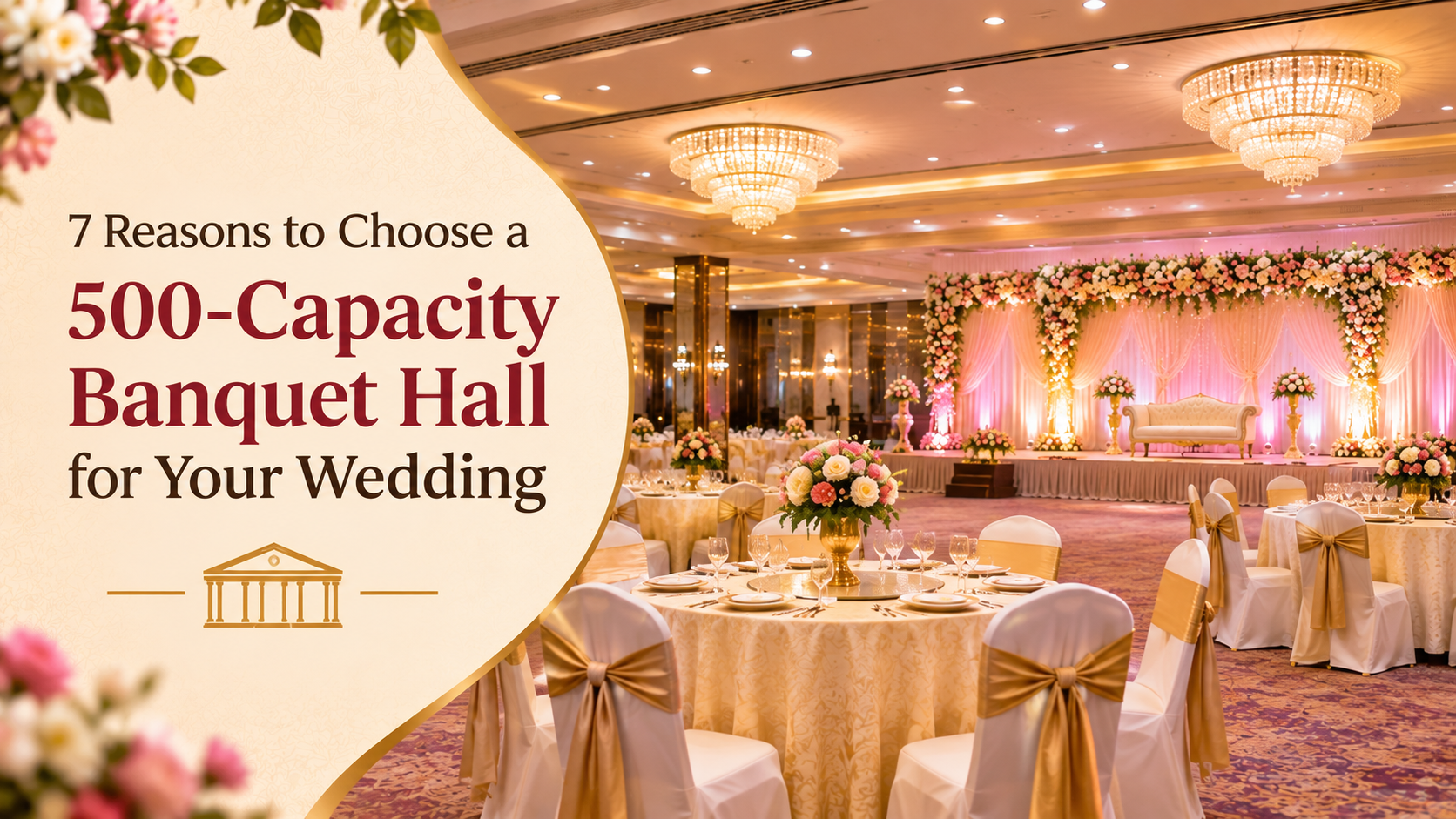
A 500 capacity wedding hall suits most big Indian weddings because it holds extended family, friends and community in one place, without the compromises of a smaller venue. It keeps the rituals, dinner and dancing under one roof, with the facilities a large crowd needs.
The challenge is that guest lists rarely stay where you left them. A cousin brings a family, a family friend needs an invite, and suddenly 300 has become 450. Choosing a venue that can absorb that growth saves a lot of last-minute stress.
In this blog, we'll walk through seven reasons a 500-guest hall works so well, along with what to check before you book.
1. A 500 Capacity Wedding Hall Matches Real Guest Lists
Indian guest lists grow through extended family, neighbours, colleagues and community. A cosy haveli that suits 100 guests simply will not cope with 500.
A hall in this range gives you breathing room. It is also sensible to book a venue with slightly more capacity than your current count, because the list almost always grows.
2. Everyone Celebrates Together Under One Roof
With a hall of this size, you avoid staggered dinner sittings or splitting guests across spaces. Elders, friends and relatives share the same moments, from the varmala to the first dance.
It also keeps the evening running smoothly. One stage, one flow and one team managing it all.
3. Weather and Comfort Are Under Your Control
Indoor venues remove weather uncertainty. Rain, wind or a heatwave will not rearrange your schedule.
Air conditioning matters more than people expect, especially for older relatives, heavy lehengas and a packed room in peak summer. Always confirm the cooling can handle a full house.
How Many Guests Actually Fit in a 500 Capacity Hall?
Fewer than 500 if everyone sits down for dinner. Many halls quote capacity for a floating or standing crowd, and the seated figure can drop to 300 or 400.
As a rough guide, seated events need 12 to 15 square feet per guest, and stages, dance floors and buffet counters can add another 20 to 40 percent. Ask the venue for a test-fit layout that matches your programme.
4. Parking, Power and Kitchens Are Usually Built In
Venues built for big crowds tend to plan for them. For 500 guests, parking is one of the biggest worries, and space for 150 or more vehicles is a sensible benchmark.
Look for generator backup and a kitchen that can serve hot food to everyone at once. Halls in this size range usually have these sorted, which saves you from arranging them yourself.
5. A Large Wedding Reception Hall Gives You Room to Design
Space in a large wedding reception hall lets you think beyond the basics. You can fit a proper stage, a real dance floor, buffet islands or live counters, and still leave aisles wide enough that queues do not spill into the seating.
Photographers and videographers also get room to move, and that shows in the final album.
6. Costs Are Easier to Plan and Compare
A 500 capacity wedding hall is usually priced either per plate, with the space included, or as a fixed rental with outside caterers. Either way, catering is the cost that grows fastest with guest count.
So keep your list honest. Overestimating by 10 percent on 500 guests means paying for 50 plates nobody eats. Weekday and off-season dates are often priced lower too, so it is worth asking.
What Should You Check Before Booking a Wedding Venue for 500 Guests?
Start with the basics:
A test-fit layout for your seating, stage and dance floor
Parking capacity and valet arrangements
Generator backup and air conditioning
Catering rules, including whether outside caterers are allowed
Inclusions, minimum guest counts and overtime charges
Then move quickly. Popular venues are often booked six to eight months ahead, so shortlist as soon as your date is fixed.
7. Plenty of 500 Capacity Wedding Hall Options to Compare
When you search for a wedding venue for 500 guests, you will find halls in this range in most Indian cities, from standalone banquets to hotel ballrooms. That means you can compare on price, location and facilities instead of settling for the only option.
Platforms like Venue By Choice make that easier by bringing banquet halls, wedding lawns, resorts and hotels together with transparent details, so families can shortlist and compare in one place.
Conclusion
A 500 capacity wedding hall works because it balances space, comfort and practicality: room for a growing guest list, protection from the weather, and facilities like parking, power and catering that are usually already in place. Just remember that capacity figures are not always seating figures, so check the layout before you commit.
The best venue is the one where your guests are comfortable and you can enjoy your own wedding instead of managing it. Do the homework early, visit at the time of day you will actually host, and trust the hall that feels right once the room is full.