
Wedding Planning Timeline: What to Book and Plan From Engagement to Wedding Day
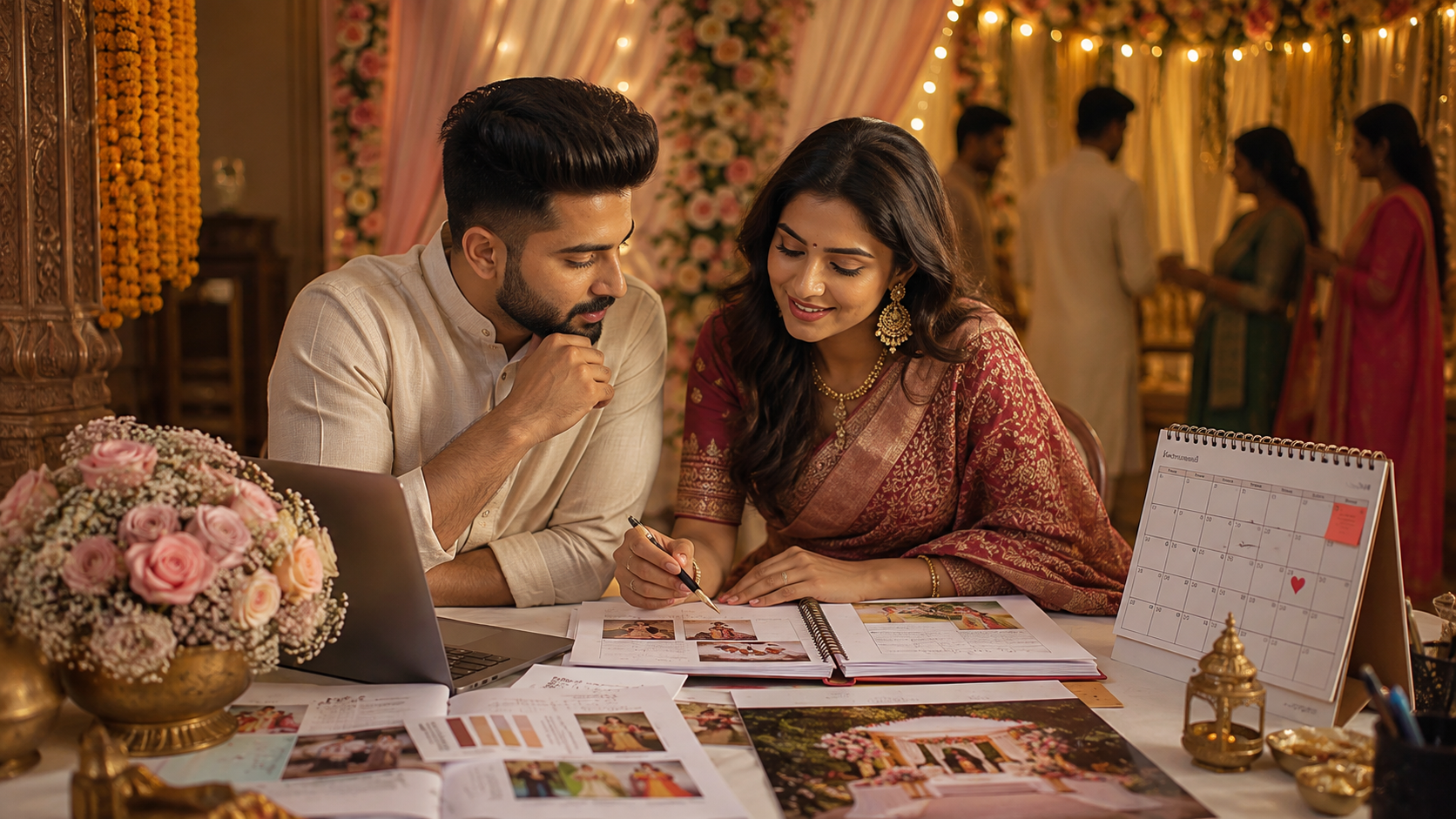
A wedding planning timeline is essentially a month-by-month map of what needs to get done between the engagement and the wedding day itself, and having one is what keeps a big, multi-part event from turning into a last-minute scramble. Most weddings need somewhere between 9 and 18 months of planning, depending on guest count and how many functions are involved, and knowing that range upfront helps couples pace themselves instead of trying to do everything at once.
The trouble is that most couples don't realize how uneven the pace actually needs to be. Some bookings, especially the venue, need to happen almost immediately, while other tasks can comfortably wait until a few weeks before the big day. Treating every item on the list as equally urgent is how families end up either burnt out by month three or scrambling to find a venue with only six months left.
In this blog, we will walk through what to book and decide at each stage of your wedding planning timeline, from the day you get engaged through the final week.
12 to 9 Months Before: Setting the Foundation
The first few months after the engagement set the direction for everything else, so this stage deserves more attention than it usually gets. Before booking anything, most families need a working budget and a rough guest count, since both numbers shape which venues and vendors are even realistic options.
Set a working budget, even if it's approximate at this stage
Draft a preliminary guest list to estimate size and scale
Research and shortlist venues based on location, capacity, and style
Book the venue once a shortlist is narrowed down
Venue selection is usually the single biggest decision in this window, partly because it locks in a date and partly because it influences catering, décor, and guest capacity decisions down the line. This is also where a resource like Venue By Choice tends to be genuinely useful, since comparing multiple venues side by side early on saves the back-and-forth that usually happens when couples fall in love with a space that can't actually fit their guest list.
How Far in Advance Should You Book a Wedding Venue?
Most planners recommend booking a wedding venue at least 9 to 12 months before the date, and popular venues in peak wedding season can get reserved even earlier than that. If the wedding falls during a high-demand period, whether that's a festival season or a weekend in peak wedding months, pushing venue booking closer to the 12-month mark gives far more room to choose from.
9 to 6 Months Before: Locking In Major Vendors
Once the venue is confirmed, attention shifts to the vendors who need the most lead time. Photographers and videographers with strong portfolios often book out well in advance, so this is the stage to have those conversations rather than waiting.
Caterers, if the venue doesn't already provide catering in-house, should be finalized here too, along with entertainment and any major décor or design vendors. Getting these locked in during this window means the remaining months can focus on refinement rather than chasing availability.
6 to 3 Months Before: Details and Design
This stage is where the wedding starts to take on its actual shape. Invitations get designed and sent, attire fittings begin in earnest, and any registry details get finalized. It's also a good time to revisit the guest list and follow up on save-the-dates that went out earlier, since RSVP tracking gets harder the closer you get to the date.
Couples often find this stretch a bit less stressful than the earlier stages, mostly because the biggest decisions are already behind them and what's left is largely execution.
What Should Be First on a Wedding Planning Checklist?
The venue should be first on any wedding planning checklist, followed closely by setting a budget and estimating the guest count. These three items are interconnected, since the venue you can afford and the venue that fits your guest list often narrow the options considerably, and getting this sequence right early prevents having to backtrack later.
3 to 1 Month Before: Finalizing Everything
With most major decisions made, this window is about tightening loose ends. Final headcounts need to be confirmed with the venue and caterer, seating charts get finalized, and vendor contracts should be reviewed one more time to confirm timing and deliverables. This is also when a detailed day-of timeline usually comes together, giving every vendor a shared reference for when they need to arrive and what they're responsible for.
Final Month and Wedding Week: The Last Stretch
The final stretch is less about new decisions and more about confirmation and coordination.
Confirm final numbers and timing with every vendor
Hold a rehearsal for the wedding party
Do a final walkthrough of the venue if possible
Pack and organize day-of essentials ahead of time
Assign a point person to handle last-minute questions on the day
Keeping this list short and manageable matters, since the last week should be about settling in rather than adding new tasks to an already full plate.
Conclusion
A wedding planning timeline works best when the biggest, most time-sensitive decisions happen first and the smaller details fill in the months that follow. Booking the venue early, sequencing vendors by how far in advance they typically get reserved, and leaving the final weeks for confirmation rather than new decisions is what keeps the whole process from feeling overwhelming.
No timeline unfolds exactly as planned, and that's fine. Building in a little flexibility at each stage, rather than expecting everything to land precisely on schedule, tends to make the entire planning experience feel a lot more manageable and a lot less stressful when the wedding day finally arrives.