Wedding Decoration Packages: What They Include and How to Choose the Right One
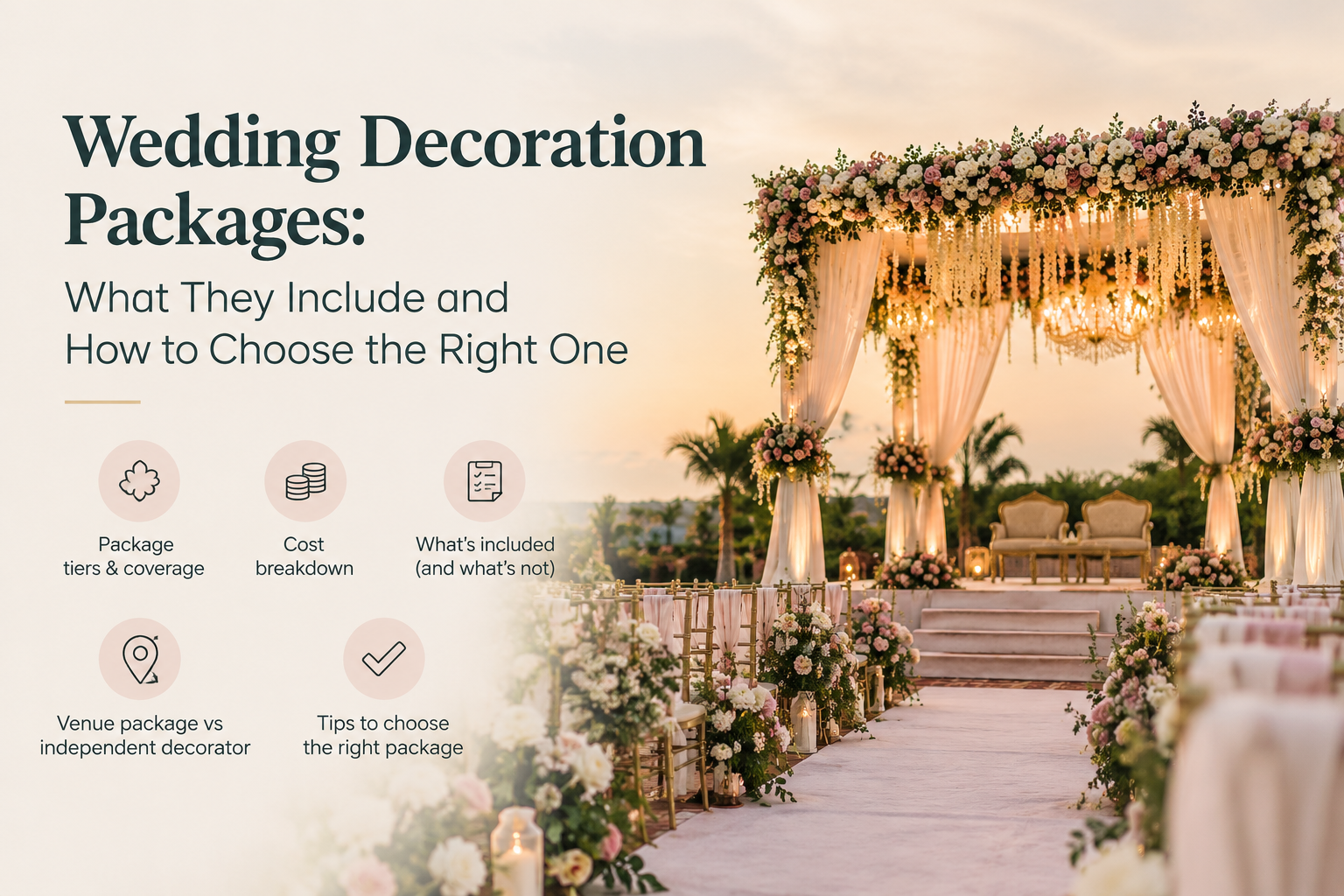
Wedding decoration packages are one of the most frequently misunderstood elements of wedding budgeting, and the misunderstanding almost always runs in the same direction: couples compare packages on price, assume comparable coverage, and discover after booking that what's included varies so significantly between packages that the price comparison was effectively meaningless. A wedding decoration package quoted at ₹1.5 lakh might cover the stage backdrop and entrance alone. Another at ₹2 lakh might cover the full venue across all functions with fresh flowers throughout. The numbers don't tell you which is which.
Getting this right requires understanding what packages actually cover before comparing what they cost. The decoration cost is significant enough in most Indian weddings to warrant structured evaluation rather than a quick price comparison, and the disappointment of discovering major coverage gaps after a booking commitment is entirely avoidable with the right questions asked at the right time.
This blog walks through what wedding decoration packages typically include, how costs break down, and the specific steps for choosing the package that suits your wedding rather than the one that sounds most comprehensive.
Understand the Three Package Tiers Before Comparing Prices
Most decoration providers structure their offerings across three broad tiers, and understanding what each tier typically covers is the starting framework for any package evaluation.
Basic packages cover the highest-visibility elements only: typically the ceremony stage or mandap backdrop, the entrance, and sometimes minimal table decoration. Flower types in this tier are usually cost-efficient varieties: carnations, gerbera, and marigold in season. Setup is limited and the overall decoration density is low, producing a clean but understated result suited to smaller, simpler celebrations or to couples who plan to supplement the base package with specific additions.
Standard packages extend coverage to more zones and typically include fresh flower arrangements at the stage, entrance, and dining areas, with moderate decoration density. This tier represents the majority of mid-range wedding decoration bookings and produces a complete, presentable result across the primary decoration zones. Premium packages deliver full-venue coverage with higher-quality flower varieties including roses, orchids, and imported blooms, greater decoration density, more installation complexity, and sometimes bespoke design elements. The visual difference between standard and premium is significant in photographs, which is why this tier is chosen by couples for whom the visual record of the celebration carries high importance.
Check What Each Package Actually Covers Zone by Zone
The most practically useful evaluation step is verifying each package's coverage zone by zone rather than accepting a general description of what's included.
Entrance and Welcome Areas
Check whether the entrance archway, the welcome wall or photo opportunity installation, and any corridor or pathway decoration leading to the function space are covered. Some packages include the stage and call it "complete decoration" while leaving the entrance entirely uncovered.
Ceremony Stage and Mandap
This is the highest-visibility zone and should be the most detailed part of any package description. Check specifically what the stage backdrop structure involves, whether the mandap is included in the package or charged separately, what flower varieties are specified for the stage, and whether the couple's seating arrangement and stage furniture are within the package scope.
Table and Guest Area Decoration
Table centrepieces, guest area floral accents, and any bar or food station decoration are often peripheral elements that packages describe vaguely or exclude entirely. Get a clear answer on how many tables are covered, what the centrepiece specification is, and whether the package distinguishes between family and general guest table coverage.
What's Usually Not Included
Most packages, including premium tiers, exclude: photo booth or selfie wall installations (typically charged separately), aisle decoration beyond basic petal application, car or procession decoration, mehendi or haldi function decoration (unless explicitly listed), and any installation requiring structural suspension from the venue ceiling. Knowing what's not included is as important as knowing what is.
What Is Typically Included in a Wedding Decoration Package?
A complete mid-range wedding decor package for a single function typically includes: entrance archway or welcome installation, ceremony stage backdrop with mandap (or reception stage for evening functions), basic table centrepieces for guest dining tables, chair back decoration or minimal seating accents, petal aisle decoration, and basic stage lighting. What it typically doesn't include: photo booths, multiple function coverage, premium flower varieties, structural ceiling installations, car decoration, and any function outside the primary reception or ceremony. Getting this list confirmed in writing from your decorator before booking is what prevents the gap between assumed and actual coverage from becoming a wedding-day surprise.
Understand the Wedding Decoration Cost Drivers
Understanding what drives cost within and across packages is what allows couples to make adjustments that deliver the most visual impact for their specific budget:
Flower variety: fresh roses and orchids cost three to five times more per stem than carnations and gerbera, making flower variety the single largest cost variable in any package
Fresh vs artificial: artificial flowers in secondary zones can reduce overall package cost significantly without the visual compromise being apparent in areas that aren't closely observed
Decoration density: the amount of material used per zone is as significant as which zones are covered; a lightly decorated stage costs less than a densely installed one using identical flowers
Number of functions: each additional function (mehendi, sangeet, reception) adds roughly 40 to 70 percent of the primary function's cost depending on zone overlap
Setup and breakdown charges: these are sometimes included and sometimes billed separately; confirm specifically whether overnight or early-morning setup time within the venue's access schedule carries additional charges
Venue Package vs Independent Decorator: How to Decide
Venue-bundled decoration packages and independently hired decorators each have genuine advantages that depend on the couple's priorities.
Venue packages offer coordination simplicity: the decorator is familiar with the space, has established access arrangements, and the billing is consolidated. They're typically more cost-efficient for standard coverage because the venue's ongoing relationship with the decorator produces better rates than a single-event hire. The trade-off is reduced design flexibility, since venue-tied decorators work within the venue's preferred style and may have limited capacity to execute a distinctive custom concept.
Independent decorators offer greater creative flexibility, the ability to choose a specific aesthetic and execute it precisely, and the option to bring a decorator whose work the couple specifically admires. They require more coordination effort and typically cost more for equivalent coverage because the logistical relationship with the venue needs to be established for each new project. Venue By Choice helps couples evaluate venues that offer quality in-house decoration packages alongside access information for independent decorators who work with each venue, making the comparison between the two options practical rather than theoretical. Their venue and decoration guidance is available at venuebychoice.com.
Should I Use the Venue's Decoration Package or Hire My Own Decorator?
The decision factors that point clearly toward each option:
Use the venue's package when: the venue's existing decorator portfolio matches your aesthetic vision, the bundled cost represents genuine value relative to separate hiring, and the coordination simplicity of a single-vendor relationship matters to your planning approach
Hire your own decorator when: you have a specific design concept that requires a decorator with particular expertise, you've seen work by an independent decorator that closely matches your vision, or the venue's decoration standard doesn't match the quality level you're targeting
A middle path: some venues permit outside decorators for a vendor access fee; if this applies and the fee is reasonable, it allows independent decorator freedom within an otherwise convenient venue setting
What to verify before deciding: ask specifically whether outside decorators are permitted, what the access fee is if applicable, what the venue's in-house decorator's recent portfolio shows, and whether the bundled price provides genuine savings or merely convenience
Conclusion
Choosing among wedding decoration packages requires understanding what each package covers zone by zone, what the cost drivers are within each tier, and whether the venue-bundled or independent decorator option better suits the specific wedding's needs and vision. Package price is a useful filter only after these coverage and quality questions have been answered, because two packages at similar prices can deliver very different visual results depending on what they actually include.
The couples most satisfied with their decoration outcome are almost always those who evaluated coverage specifically before committing to a cost, and who verified the package scope in writing rather than accepting verbal descriptions that leave significant room for interpretation. That specificity at the evaluation stage is what ensures the decoration that appears on the wedding day matches what was imagined and agreed during planning.