
Reception Venues: How to Find the Right Setting for Your Wedding Celebration
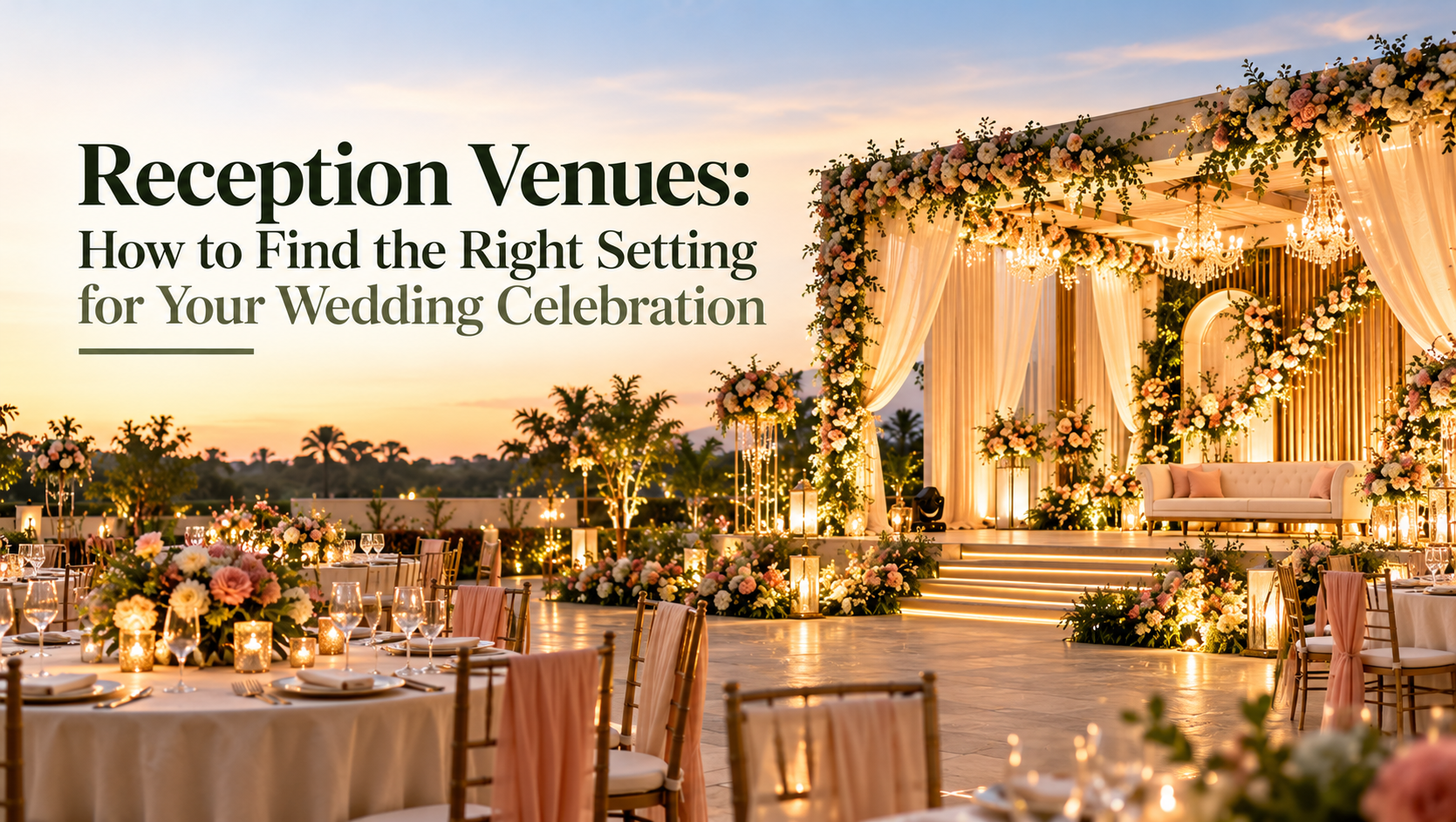
Finding the right reception venues comes down to three things: knowing how many people you are hosting, what you want the day to feel like, and how much you are prepared to spend to create that experience. Get clear on those three things first, and the search becomes far more manageable. Skip them, and even the most beautiful space can end up feeling like a compromise.
The challenge most couples run into is that the venue search begins too early in the process, before the real decisions have been made. You walk into a stunning banquet hall, fall in love with the chandeliers, and book it, only to realise two months later that the per-head catering cost has pushed every other budget decision into difficult territory. Or you pick a venue that comfortably holds 300 people for a guest list that eventually grows to 450. The venue is a container for everything else on your wedding day, which is why choosing it thoughtfully, rather than emotionally, makes such a difference.
In this blog, we'll walk through the key factors that shape a good venue decision, the types of venues available, and the questions worth asking before you sign anything.
Start with the Numbers: Guest Count, Budget, and Style
Before you visit a single venue, fix three things: a rough guest count, a total venue budget, and a sense of the atmosphere you want to create.
Guest count is the most practical starting point. A venue that comfortably seats 150 will feel sparse for 250 and impossible for 400. Working out a realistic number early, even a range, immediately filters out spaces that simply will not work. Most experienced venue managers will tell you that capacity is the single factor couples most often underestimate.
Budget should account for more than just the venue hire. Catering, décor, lighting, sound, and any vendor access fees often add up to a significant amount beyond the base booking cost. Setting aside a buffer of around five percent for unexpected expenses is a widely recommended practice, and for good reason. Costs have a way of expanding once planning is underway.
Style shapes the shortlist. A formal sit-down dinner for 200 has very different venue requirements than an open-air cocktail reception for 80. Knowing whether you want something traditional, contemporary, outdoor, or intimate helps you avoid spending time visiting spaces that will never feel right for the occasion you have in mind.
What Are the Different Types of Reception Venues?
India offers a wide range of reception venues across formats and price points. Understanding what each type offers, and where each one works best, makes the shortlisting process considerably cleaner.
Banquet Halls
Purpose-built for large celebrations, banquet halls are the most commonly chosen format for Indian wedding receptions. They typically come equipped with in-house catering facilities, flexible seating configurations, and some level of décor support. Most are climate-controlled, which removes one major variable from the planning process. Pricing is usually structured per head, and the range across cities can be substantial, so comparing like with like is worth the effort.
Hotel and Resort Venues
Hotel and resort settings offer a full-service experience that appeals particularly to couples with outstation guests. Accommodation, catering, and event management are often bundled into a single package, which simplifies coordination. The trade-off is that per-head costs tend to run higher than standalone halls. For multi-day celebrations spanning mehendi, sangeet, and reception, having everything on one property can also reduce the logistical load considerably.
Farmhouses and Outdoor Spaces
Farmhouse venues have grown significantly in popularity over recent years, driven largely by their flexibility and visual appeal. Open-air settings allow for a level of personalisation in lighting, décor, and layout that built halls often cannot match. They tend to work well for smaller, more intimate gatherings and for couples with a clear visual direction for their celebration. The planning requirements are more detailed, covering power supply, weather contingencies, and vendor access, so they reward couples who are willing to invest time in the coordination.
What Should You Ask Before Booking a Wedding Reception Hall?
Visiting a venue without a prepared set of questions is one of the most common ways couples leave with an incomplete picture. The presentation is polished. The photographs are flattering. It is only later, during contract review or vendor coordination, that the gaps show up.
A few questions worth asking before any wedding reception hall booking:
How many events does the venue host on the same day or weekend?
What does the catering package include, and are external caterers permitted?
Are there restrictions on décor, sound levels, or vendor access?
What is the setup and breakdown window on either side of the event?
How many parking spaces are available, and how is overflow managed?
Is accommodation available on-site or nearby for outstation guests?
What is included in the base booking fee, and what carries an additional charge?
Clear, specific answers to these questions tell you a great deal about how a venue operates and how your event will actually be managed on the day.
How to Make Your Final Venue Decision with Confidence
Once you have a shortlist, comparing marriage reception venues on a consistent set of criteria, rather than by overall impression, leads to clearer decisions. Create a simple comparison across guest capacity, cost, catering flexibility, parking, and any non-negotiables specific to your event. Gut feeling matters, but it should be the tiebreaker rather than the primary driver.
Visit in person before committing. Photographs and virtual tours have improved, but neither shows you how the space feels at the scale of your event, how the lighting looks in the evening, or whether the parking approach actually works for a large guest arrival. Reviews from couples who have used the venue recently are also worth reading carefully. A venue's service quality on the actual day is something only previous guests can speak to with authority.
Conclusion
The right reception venues are out there for every kind of celebration, budget, and guest count. The couples who find them most confidently are typically the ones who did the practical groundwork first: fixed their numbers, understood the types of spaces available, and walked into venue visits with the right questions already prepared.
A venue does not need to be the most spectacular you saw to be the right choice. The best ones feel effortless on the day because every practical decision was made well in advance. That is the goal, and it is entirely achievable with the right approach.