
Reception Planning Guide: A Step-by-Step Checklist for Your Celebration
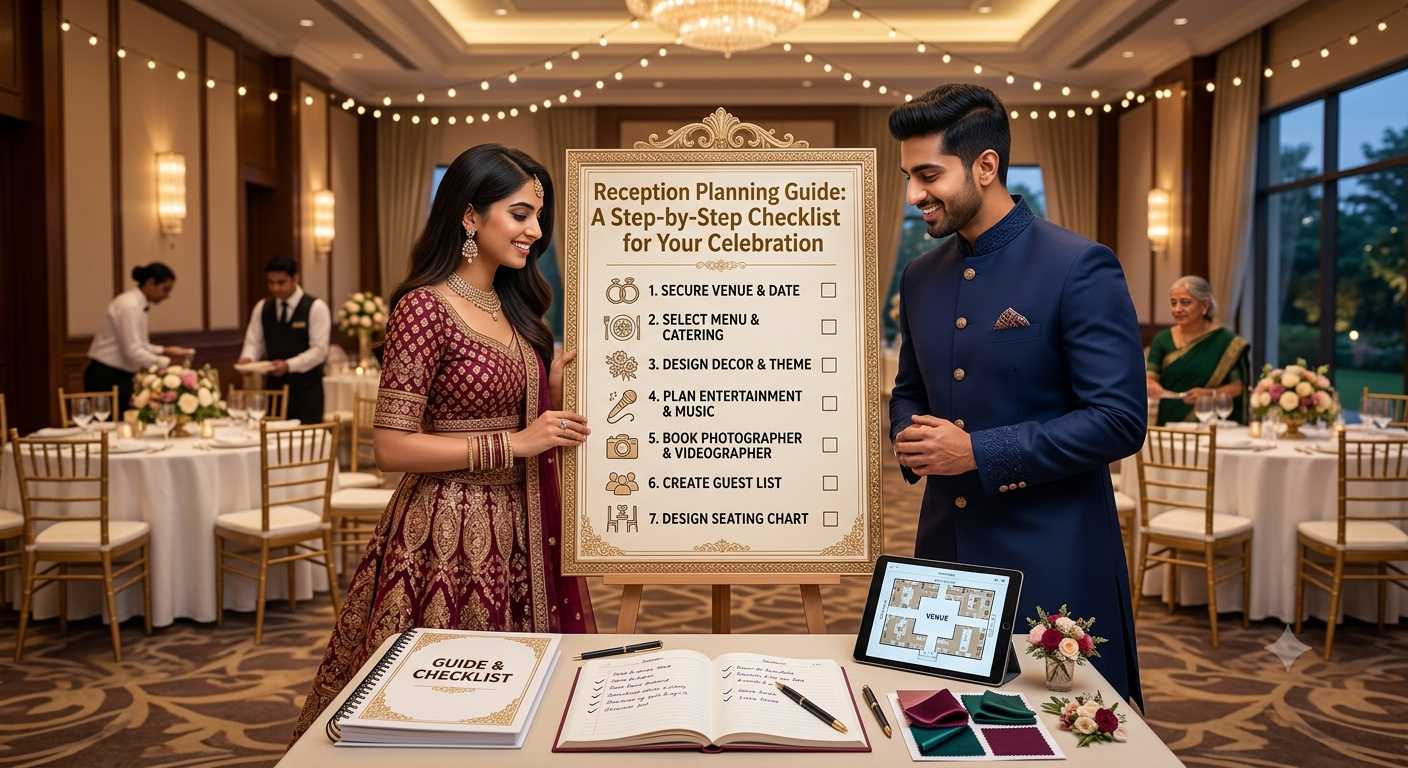
A wedding reception involves more simultaneous moving parts than most couples anticipate when they first begin planning. The venue, catering team, decorator, photographer, entertainment, and invitation logistics all need to align around a single date, a specific guest count, and a compressed event timeline that leaves very little room for the coordination gaps that rushed or unsequenced planning produces. Approaching this without a structured reception planning guide is what produces the experience of constant last-minute scrambling: discovering that the decorator and caterer have conflicting setup requirements, or that the event programme hasn't been confirmed with the anchor, or that the stage design doesn't work with the photographer's lighting setup.
A step-by-step approach doesn't eliminate the complexity of planning a reception, but it does eliminate the category of problems that come from doing things in the wrong order or discovering critical decisions haven't been made when they should have been.
By the end of this blog, you'll have a clear, sequential reception planning checklist that covers every key decision from twelve months before to the day itself.
Step 1: Fix the Date, Guest Count, and Budget Before Anything Else
Three inputs must be confirmed before any other reception planning decision can meaningfully begin: the date, the guest count, and the total budget. These aren't the fun decisions, but they're the ones that every subsequent decision depends on, and beginning the venue search or vendor conversations without them produces misleading results that require revision once the real numbers emerge.
The date determines venue availability, vendor availability, and the seasonal premium or discount that applies to the reception's total cost. A November Saturday on an auspicious date competes for the same venue inventory and vendor calendar as every other couple targeting the same window, making early date confirmation the most protective step available in the planning process.
The guest count determines the minimum venue capacity required, the catering per-head cost that forms the largest single budget line, and the decoration density that fills the space appropriately rather than making it feel either cramped or empty. A count that fluctuates between 300 and 450 through the planning process makes every vendor conversation provisional, which delays commitment and loses the availability windows that planning is designed to secure.
The budget sets the tier of option available in every category. A budget confirmed at the beginning of planning keeps vendor conversations in a realistic range rather than generating enthusiasm for options that the budget won't actually support.
Step 2: Secure the Venue First
Venue is the first booking in a reception planning sequence because it gates every other decision. The date is confirmed when the venue is booked. The catering arrangement depends on whether the venue has mandatory in-house catering or permits outside caterers. The decoration scope depends on the venue's physical characteristics, ceiling height, stage dimensions, and access hours. The invitation logistics depend on having a confirmed venue address and date. Starting the decorator or caterer conversation before the venue is confirmed means having those conversations twice: once before the booking and once after, when the actual venue's specific characteristics and requirements are known.
Book the venue with a signed agreement and deposit as soon as the date, guest count, and budget are confirmed. Venue availability on popular dates moves quickly enough that the gap between an initial site visit and a formal commitment is where dates are lost to other bookings.
How Far in Advance Should I Plan My Wedding Reception?
For peak season reception dates in October through December and February, venue conversations should begin twelve to eighteen months before the event and booking should be completed by twelve months before. For shoulder season dates, nine to twelve months is adequate. For off-peak periods, six months is workable for most venues and vendors. These timelines apply to the venue booking specifically. Vendor conversations for photographers, decorators, and entertainment can follow venue confirmation, typically in the nine to twelve month window for peak dates and six to nine months for shoulder season.
Step 3: Confirm Catering Arrangements
Catering is typically the largest single cost in a reception budget, and the decisions made in the catering planning stage affect the total event cost more than any other vendor category.
In-House vs Outside Caterer Decision
Confirm with the venue whether in-house catering is mandatory or whether outside caterers are permitted. This decision affects both the food quality you can deliver and the total catering cost. In-house catering simplifies coordination but reduces flexibility. Outside catering requires more coordination but allows the family to choose a caterer whose specific food quality and menu style they've experienced and trust.
Menu Planning and Food Station Design
The reception menu should balance variety across non-vegetarian and vegetarian options, live cooking stations that create engagement and reduce queue pressure at static food sections, and the regional specialties that the family's cultural context expects to see at a proper wedding spread. Discuss the food station layout with both the caterer and the decorator so that the station placement integrates with the decoration plan rather than conflicting with it.
Per-Head Count and Minimum Spend Confirmation
Confirm the per-head catering cost against your confirmed guest count and verify that the total catering spend meets any minimum spend requirement the venue applies. Add fifteen to twenty percent to the confirmed guest count for the caterer's planning purposes, since actual attendance typically exceeds formal RSVP numbers at Indian weddings and running short of food is the catering failure with the most visible consequence.
Dietary Requirements and Special Menus
Identify guests with specific dietary requirements, religious food restrictions, or health-related dietary needs, and confirm with the caterer how these will be accommodated. A clearly labelled section of the menu or a separate service arrangement for guests with specific needs prevents the situation where guests can't find suitable food at an event where the family has invested substantially in the catering.
Step 4: Plan Decoration, Stage, and Floral Arrangements
Decoration planning begins with a site visit to the confirmed venue, since the physical characteristics of the space determine what decoration formats work well and what the achievable visual outcome looks like within the budget. The stage or backdrop for the couple is the highest-priority decoration element and the one that should receive the most detailed brief, because it appears in every significant photograph from the event.
Confirm with the decorator what the setup and breakdown access hours are and whether these align with what the venue permits. Coordinators need specific venue access times to install complex stage setups, and discovering a mismatch between the decorator's setup requirements and the venue's access window on the day before the event is a preventable problem that clear upfront confirmation eliminates.
Step 5: Organise Entertainment, Music, and the Event Programme
The event programme for the reception is the coordination document that determines whether the evening runs smoothly or produces the disorganised experience that guests notice and remember. Programme elements to plan and sequence into a confirmed timeline:
Guest arrival and welcome drink period with background music before the formal programme begins
Couple's entry with the specific song, lighting, and introduction arrangement confirmed with the DJ or live music coordinator in advance
Formal programme elements including speeches, cultural rituals, or ceremonial elements unique to the family's traditions
Dinner service opening and the transition from formal programme to dining, which determines how the evening's energy shifts
Entertainment programme including dancing, live performance, or guest activities planned to run alongside dining rather than replacing it
Closing programme element and the timeline for the couple's exit if applicable
Confirm the event programme with the anchor or compere at least two weeks before the reception rather than briefing them on the day, since the programme quality depends on the anchor knowing the family's preferences, the guest profile, and the specific programme elements they'll be managing.
Venue By Choice helps couples find wedding reception venues that suit their guest count, decoration vision, and catering requirements, making the venue selection stage of this checklist considerably more manageable than an unguided search. Their venue listings and planning support are available at venuebychoice.com.
What Is Typically Included in a Wedding Reception?
A standard Indian wedding reception typically covers:
Guest arrival and welcome arrangements including entry management and a welcome drink or snack station
A decorated stage or backdrop for the couple to receive guests and for the event's primary photography backdrop
A formal programme including the couple's entry, any speeches or ceremonial elements, and the opening of dinner service
A complete food and beverage service spanning non-vegetarian and vegetarian menus with live stations and standard courses
Musical entertainment through a DJ or live music that covers both the formal programme and the dinner and dancing period
A decorated dining area with table centrepieces and guest seating
A photo opportunity or designated photography area for guest photographs
What's typically not included in the standard reception format: pre-reception cocktail arrangements if planned as a separate event, post-reception arrangements like a separate late-night gathering, and any additional functions held at the same venue on the same day that are separately programmed and decorated.
Conclusion
A complete reception planning guide follows a clear sequential logic: confirm the date, guest count, and budget first; secure the venue before any other vendor conversation; plan catering against the confirmed venue arrangement; develop decoration and entertainment from there; and confirm the event programme with all vendors well before the day. Each step clears the ground for the next and prevents the category of planning problems that come from making decisions out of sequence.
The families who report the most stress-free reception planning experience are almost always those who committed to the sequence rather than running conversations in parallel before the foundational decisions were made. Following the checklist isn't the most exciting part of planning a reception, but it's the part that makes the day itself as uncomplicated as the investment in it deserves.