
Floral Decoration for Weddings: Ideas, Costs and Ways to Create an Elegant Venue
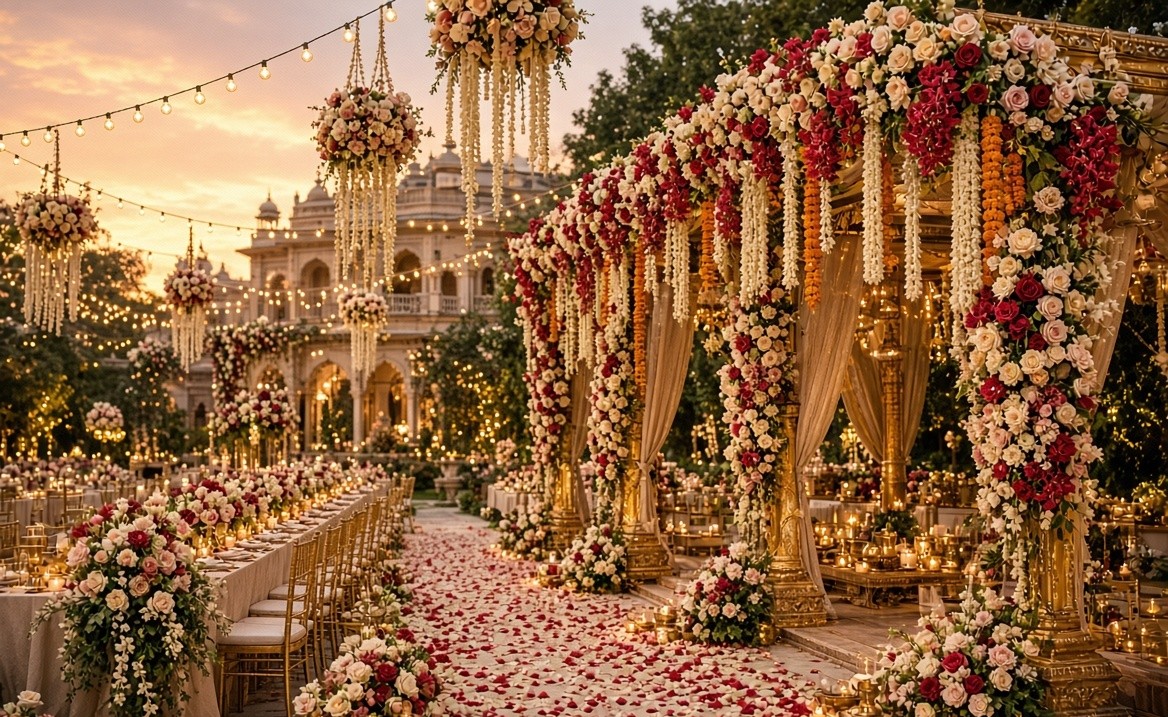
Floral decoration for weddings does more than make a venue look beautiful. It shapes the entire sensory experience of the celebration: the fragrance that greets guests at the entrance, the visual warmth of blooms at the ceremony stage, the intimacy that table centrepieces create at a reception, and the way fresh flowers in natural colours make photographs feel alive rather than staged. Of all the decoration decisions in wedding planning, florals are the ones that most directly produce the emotional atmosphere couples are trying to create, and they deserve more structured planning than most couples give them before the first decorator conversation begins.
The most common floral planning mistake is treating the venue as a single decoration canvas rather than a series of distinct zones, each with different visual requirements, budget implications, and photography significance. Planning zone by zone produces better creative results and significantly better budget control, because it allows the most important zones to receive the most investment while secondary areas are handled efficiently without compromising the overall result.
Here's what this blog covers: the key floral decoration zones in a wedding venue, popular floral decor ideas for each, how costs break down, and how to work with a decorator to create an elegant result.
Plan Floral Decoration Zone by Zone for the Best Results
A wedding venue has five main floral decoration zones, each playing a different role in the guest experience and the photographic record of the day. The entrance creates the first impression and appears in arrival photographs. The ceremony stage or mandap is the highest-visibility zone and the background for the most important ceremony photographs. The aisle or pathway frames the most emotionally significant moments of the ceremony itself. Table centrepieces are the florals guests interact with most closely and spend the longest time beside during the reception. Secondary decorative elements including photo booth backdrops, bar fronts, and seating area accents add completeness without requiring the same investment as primary zones.
Understanding which zones are photographically and experientially primary for your specific wedding format lets you allocate the floral budget where it produces the most visible impact rather than spreading it thinly and evenly across all zones.
Popular Floral Wedding Decor Ideas by Zone
Each zone has a distinct set of design approaches that suit it specifically, and understanding the options within each zone before meeting a decorator produces a more productive and focused creative conversation.
Entrance and Welcome Archways
The entrance sets the aesthetic tone before guests have seen anything else, making it the most impression-forming zone relative to its typical decoration cost. Floral archways framing the entrance gate or venue door, welcome walls using fresh or artificial blooms in the wedding's colour palette, and garland installations on pillars or columns are the most popular approaches. For Indian weddings, marigold and rose combinations at the entrance carry both visual impact and cultural familiarity. Contemporary couples increasingly prefer more architectural entrance installations using tropical foliage, monstera, and palm with selective floral accents for a cleaner, more modern arrival experience.
Mandap and Ceremony Stage Florals
The mandap or ceremony stage is the highest-investment floral zone for most Indian weddings because it's where the most significant photographs are taken and where the couple spends the longest time during the ceremony. Floral curtains, draped installations hanging from the mandap structure, flower ceiling canopies, and fully floral-covered column and arch treatments are all current approaches that work well photographically. The choice of flower varieties here matters more than anywhere else: roses, orchids, and lilies photograph beautifully in controlled lighting, while seasonal flowers like gerbera and carnation offer cost-efficient volume when budget requires it.
Aisle and Pathway Decoration
The aisle is the zone most emotionally charged and most dependent on flower placement rather than abundance. Petals on the aisle surface, low pedestal arrangements at regular intervals, suspended floral chandeliers above the aisle, and chair or bench decoration with single bloom accents all frame the most significant ceremony photographs without requiring the installation density that the mandap demands. The aisle is often the zone where selective restraint produces a more elegant result than dense decoration.
Table Centrepieces and Guest Area Florals
Table centrepieces are the florals guests interact with most closely, making their quality and freshness particularly noticeable. Low, lush centrepieces using seasonal flowers in the wedding palette create a warm, intimate table atmosphere. Tall arrangements on narrow pedestals create visual drama and allow sight lines across the table for conversation. Single statement blooms in individual vessels at each place setting are the minimalist alternative that suits contemporary reception aesthetics. The consistency of centrepiece design across all guest tables is as important as the quality of any individual arrangement.
How Much Does Wedding Flower Decoration Cost in India?
Floral decoration costs vary significantly by zone, flower variety, fresh vs artificial choice, and total venue size:
Entrance archway or welcome wall: ₹15,000 to ₹60,000 depending on size and flower variety
Mandap and ceremony stage full florals: ₹60,000 to ₹2,50,000 for a premium fresh flower treatment at scale
Aisle decoration (petals, pedestals, hanging elements): ₹20,000 to ₹80,000 depending on length and installation complexity
Table centrepieces per table: ₹2,500 to ₹8,000 per table for fresh flowers, ₹1,500 to ₹4,000 for quality artificial arrangements
Total full venue floral package: ₹1,50,000 to ₹5,00,000 for a mid-range complete decoration, ₹5,00,000 to ₹15,00,000 and above for premium fresh flower treatments across a large venue
Fresh Flowers vs Artificial: How to Decide by Zone
The fresh versus artificial decision doesn't need to be made uniformly across the whole venue. A zone-by-zone approach manages costs while protecting the visual result where it matters most.
Fresh flowers are worth the investment in zones that are highly photographed, closely observed, and central to the ceremony experience: the mandap, the entrance archway, and table centrepieces. Their texture, fragrance, and natural variation in a close-up photograph are genuinely distinguishable from artificial alternatives, and these are the zones where that distinction matters to guests who are near them.
Artificial and dried botanical elements perform well in secondary zones: aisle column decorations viewed from a distance, larger area backdrop installations where individual flower quality isn't observable, and photo booth arrangements where durability across a long event is more important than fresh flower character. Quality artificial blooms in secondary zones free budget for fresh flower investment where the visual return is highest.
How to Work With a Floral Decorator to Create an Elegant Venue
The decorator conversation produces the best results when couples arrive with a clear zone-by-zone priority list, a realistic budget range per zone, and a reference set of images that show the aesthetic they're drawn to rather than specific designs they want replicated. Decorators work best when given a clear brief and creative latitude rather than a rigid specification, because their knowledge of what works in specific venues and with specific flower varieties produces better results than a literal replication of a Pinterest reference.
The questions worth asking before finalising any floral decorator are: which flowers are in season at the time of the wedding (seasonal flowers perform better and cost less), what's their approach to freshness management across a long event day, and what's the process if specific flowers become unavailable between booking and the event. Venue By Choice helps couples find venues that suit their floral decoration vision, since the venue's physical characteristics, ceiling height, lighting, and available natural light, directly determine which floral styles perform best within it. Their venue listings are available at venuebychoice.com.
How Do I Choose a Floral Decorator for My Wedding?
The selection criteria that produce the most reliable outcome:
Review portfolios specifically from weddings at the same venue or in similar physical settings, since a decorator's work always reflects the venue's light and architecture as much as their own creative skill
Ask to see photographs taken under event lighting rather than only in natural light or post-processed images, since event lighting conditions are where the decoration actually exists during the wedding
Confirm that the decorator handles on-day installation and has experience working within the timing constraints that wedding venue access schedules impose
Clarify the substitution policy for unavailable flowers and whether the client is consulted before substitutions are made
Get the full floral specification in writing including flower varieties, quantities, and installation scope so that what's delivered matches what was agreed
Conclusion
Floral decoration for weddings creates the sensory and visual atmosphere that couples and guests carry in memory long after the event itself. Planning it zone by zone, understanding the fresh versus artificial trade-offs at each level, and working with a decorator through a clear brief rather than a rigid specification produces an elegant result that reflects the couple's vision rather than a generic version of it.
The most beautiful floral decorations at Indian weddings are almost always the ones where someone made deliberate choices about where to invest and where to exercise restraint, rather than trying to fill every surface equally. That restraint, applied thoughtfully, is what produces elegance rather than abundance.