Essential Questions Parents Should Ask Before Finalizing a Wedding Venue
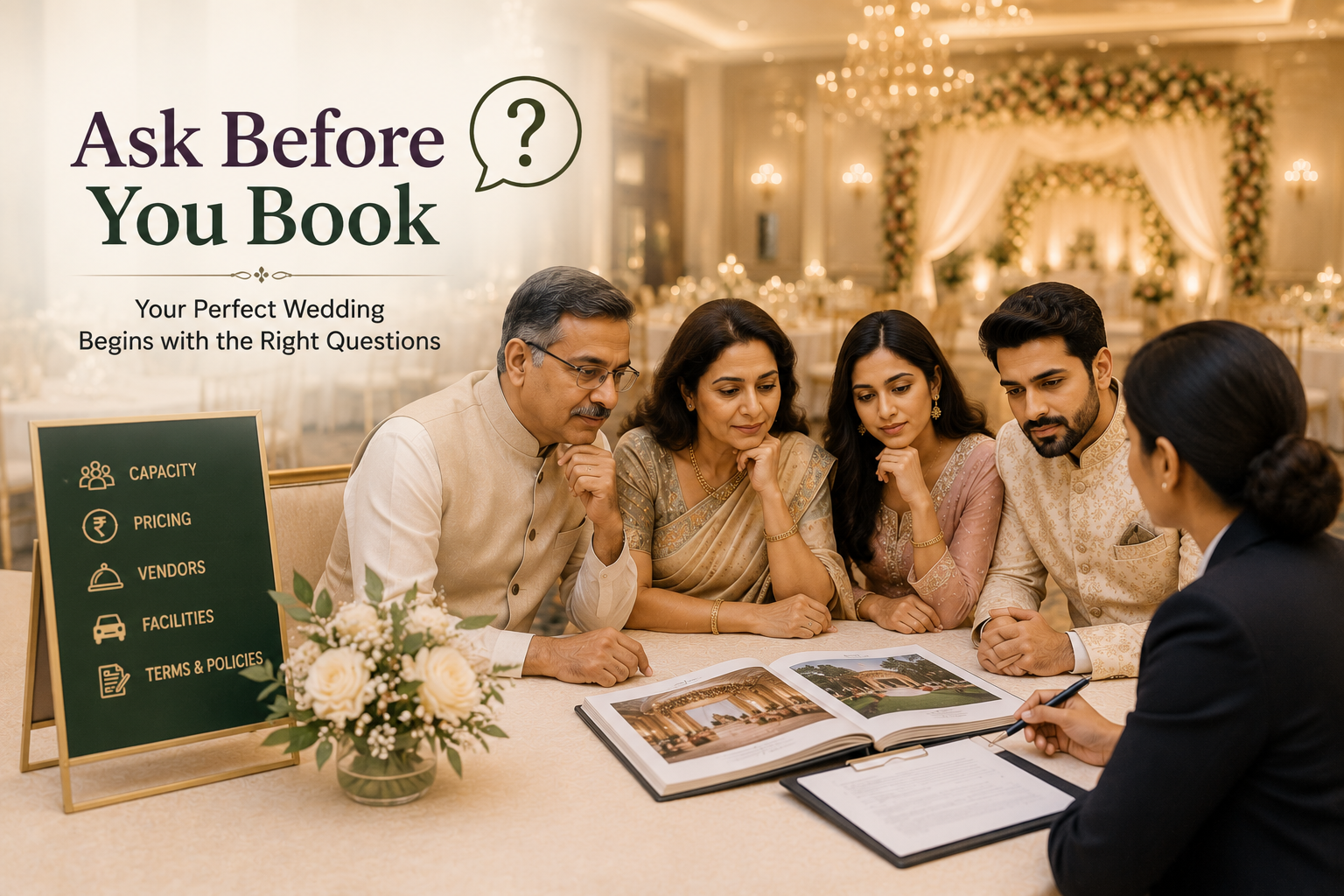
Most venue site visits follow the same pattern: the coordinator walks you through the main hall, shows you the garden, describes the catering setup, and the family leaves feeling either impressed or underwhelmed by how the space looks. What happens much less often is the conversation that determines how the wedding day actually runs: the questions about what's included and what isn't, what happens when the power goes out, who manages vendor access on the day, and what the cancellation terms look like in a contract that everyone is too excited to read carefully.
The emotional experience of a venue visit makes it easy to defer these questions. The space looks beautiful, the coordinator is persuasive, and asking about cancellation policies or vendor restrictions in the middle of a site tour feels like introducing doubt into a moment that's supposed to feel celebratory. Parents, particularly, carry concerns that the couple may not be focused on: parking for two hundred guests, dietary accommodation for elderly relatives, accommodation for family arriving from other cities, and what happens if October rain turns an outdoor ceremony into a problem with no backup plan.
This blog walks through the six categories of questions worth asking before any wedding venue commitment is made, so nothing important gets left to assumption.
Ask About Capacity, Layout, and Space Before Anything Else
Comfortable venue capacity and maximum capacity are not the same number, and the gap between them matters enormously on the actual day. A hall that fits three hundred people at maximum density with standing room near the entrance feels different from one designed comfortably for that count with adequate space for movement between tables, a dance floor, a stage, and a catering area without everything feeling crowded.
Ask the venue coordinator to walk you through how the space is configured specifically for your guest count rather than showing you the empty hall and leaving the arithmetic to you. Ask whether the seating layout can be customised or whether the venue has a fixed arrangement. Ask whether the space for functions like mehendi or haldi is separate from the main hall or whether the same space needs to be reset between events, and how long that reset takes.
Specific capacity and layout questions to ask before leaving the site visit:
What is the comfortable seated dining capacity for our guest count, not the fire-safety maximum?
How is the space typically configured for a reception versus a ceremony function?
Can we bring in our own seating and furniture arrangement, or is the venue's setup fixed?
What is the turnaround time between a daytime function and an evening function in the same space?
Is there a separate area for guests waiting or for cocktail hour, or does everything happen in one room?
Get Complete Clarity on Pricing and What's Actually Included
The quoted venue price and the total amount you'll spend at that venue are frequently different numbers, sometimes significantly so. Before any signed commitment, get an itemised picture of what the base price includes and what it doesn't.
Ask specifically whether catering is included or charged separately and at what rate per head. Ask whether security, cleaning, parking management, and generator hire are within the quoted price or additional. Ask whether there's a minimum guaranteed spend on food and beverages that applies regardless of actual guest consumption. Ask what the overtime charge is if the event runs beyond the contracted hours, because this is a cost that appears in almost every wedding and is almost never anticipated in the initial budget conversation.
The goal isn't to find reasons to distrust the venue. It's to produce a complete cost picture before signing rather than discovering line items after the contract is already in place.
What Should I Ask a Wedding Venue Before Signing a Contract?
The pre-signing checklist should cover four non-negotiable areas: inclusions and exclusions written explicitly in the contract rather than discussed verbally, the damage deposit amount and the conditions for its return, the payment schedule and the consequences of late payment at each stage, and the date-change and cancellation policy with specific reference to how much of the paid amount is refundable at different cancellation windows. Any commitment made in a sales conversation that isn't reflected in the contract document should be added before signing, since verbal assurances have no standing once a dispute arises.
Clarify Vendor Policies Before Assuming Flexibility
Vendor policies vary more between venues than almost any other contract element, and the financial implications of getting this wrong are significant. A venue that restricts outside catering to its in-house team removes your ability to use a caterer whose food you know and trust, at a price point you've already budgeted around. A venue that charges an outside vendor fee for decorators adds a cost that wasn't visible at the time of booking.
Catering: In-House or Outside Vendors?
Ask directly whether outside caterers are permitted, whether there's a fee for bringing in external catering, and what the process is for kitchen access and setup if outside catering is allowed. Some venues permit outside caterers for specific food types while requiring in-house catering for others.
Decoration and Decor Vendor Policy
Ask whether your chosen decorator can access the venue for setup, whether there are restrictions on what can be attached to walls or ceilings, and whether the venue has a list of approved decorators that must be used rather than your own selection.
Photography and Entertainment Restrictions
Some venues have restrictions on drone usage, certain lighting equipment, or specific entertainment types like live bands above a certain decibel level. Ask these questions specifically if any of these elements are part of your wedding plan rather than discovering restrictions on the day itself.
What Happens If You Want to Change Vendors After Booking
Ask explicitly whether vendor choices are locked in at the time of booking or whether changes can be made up to a certain point before the wedding. This matters because vendor relationships sometimes change between booking and the event, and knowing whether substitutions are permitted and under what conditions avoids an uncomfortable conversation later.
Ask About Logistics That Parents Worry About Most
This is the category that parents raise most often and that younger couples sometimes deprioritise during the excitement of site visits. Ask about parking capacity relative to your expected number of vehicles rather than assuming the venue has adequate provision. Ask whether there's a dedicated accessible entrance and seating area for elderly guests who may have mobility limitations. Ask what the power backup arrangement is, whether a generator is on-site or hired for events, and what the switchover time is if mains power is interrupted during the function.
For weddings with significant outstation guest attendance, ask whether the venue has accommodation on-site or can recommend nearby properties with which they have a booking relationship. Ask whether there's a designated outdoor contingency plan if any functions include outdoor elements, and what triggers the decision to move indoors if weather becomes a factor. Venue By Choice helps families compare these logistics systematically across multiple venue options rather than piecing together this information venue by venue through separate site visits, and their listings are available at venuebychoice.com.
Understand Cancellation Terms and Day-Of Coordination Before Signing
Cancellation terms are the contract section most couples and families read least carefully and regret most if circumstances change. Ask specifically what percentage of the total booking value is retained at different cancellation points: three months out, one month out, two weeks out. Ask whether there's a date-change policy that allows rescheduling to a different date without full forfeiture, and whether that policy requires a fee or depends on the new date's availability.
Day-of coordination is equally important and equally often assumed rather than confirmed. Ask whether a dedicated venue coordinator will be present throughout the event or whether the venue's involvement ends after setup. Ask who the single point of contact is on the wedding day for vendor questions, timeline management, and any issues that arise, and make sure you have that person's direct contact information before the event.
What Do Parents Typically Overlook When Booking a Wedding Venue?
The most consistently missed questions from a parent's planning perspective:
Whether the venue has a dedicated green room or preparation area for the bride's and groom's families separately, since shared preparation spaces create timeline pressure on high-activity wedding mornings
What the guest arrival management process looks like, whether there's dedicated staff for greeting and seating guidance or whether guests self-navigate into the function
Whether the wedding venue's catering cost and team can accommodate specific dietary requirements at scale, including Jain food, no-onion-no-garlic preparations, and allergy-specific meals for guests with medical dietary restrictions
What the process is for returning personal items, rental equipment, and decor elements after the event, and whether the venue provides any assistance with post-event logistics
Whether the venue has previously hosted weddings of a similar size and cultural format, since a venue experienced with South Indian weddings may not have the same operational familiarity with a large North Indian wedding's specific function sequence and requirements
Conclusion
The questions before finalizing a wedding venue that matter most aren't the ones about how the space looks but the ones about how it works: what's included, what the vendor policies are, how logistics are managed, and what the contract says about situations that nobody wants to think about during an exciting site visit. Going through these systematically before signing protects the family from the most common and most preventable sources of wedding-day stress.
The families who handle wedding venue booking most smoothly are almost always the ones who treated the site visit as the beginning of a due diligence process rather than the end of a decision. A venue that answers all of these questions confidently and in writing is usually one that's confident about what it delivers, and that confidence is the most reliable signal available that the commitment being made is a sound one.