
Destination Reception: How to Plan a Memorable Celebration Away from Home
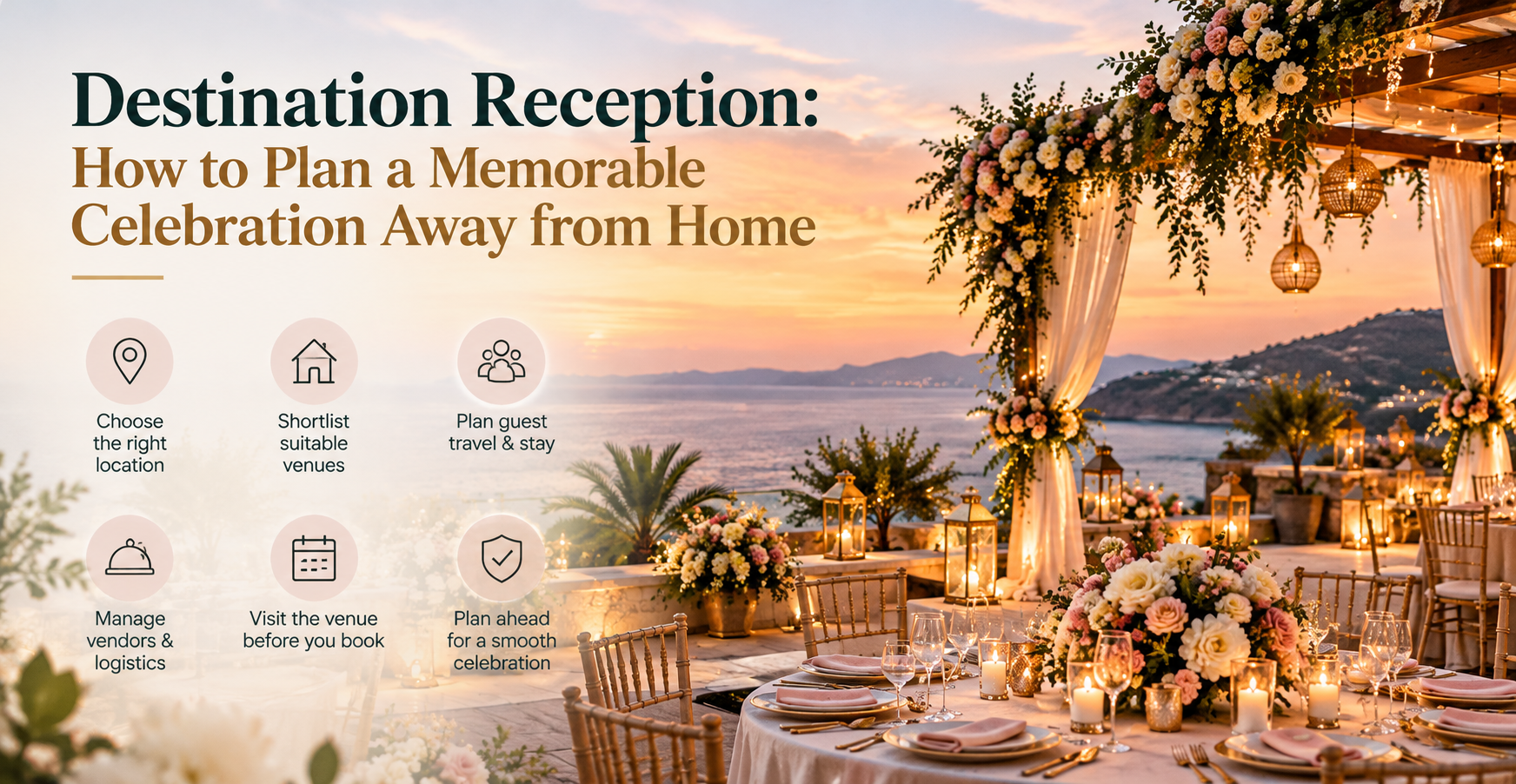
A destination reception is a wedding celebration held away from the couple's home city, usually after the ceremony has already taken place. More couples are choosing this route because it keeps the formal ceremony simple and close to home while giving the celebration itself a fresh setting, whether that's a beach, a hill station, or a heritage town.
Planning one is different from booking a banquet hall in your own city, though. Location, guest travel, vendor access, and local conditions all become part of the venue decision, which means the usual approach of visiting a few halls on a free weekend doesn't quite work anymore.
In this blog, we'll walk through how to plan a destination reception step by step, from choosing a location to handling guest logistics and confirming the right venue.
Step 1: Decide What Kind of Destination Fits Your Celebration
Start with the kind of setting that suits your guest list rather than the prettiest photos you've saved. A beach resort works well for a relaxed, younger crowd, while a hill station or a heritage city can suit a mixed group with older relatives who may prefer easier access and cooler weather.
Guest count and season deserve equal weight. A destination that's lovely in winter can be uncomfortable or even inaccessible during monsoon, so check the weather patterns for your intended month before falling for a place.
Step 2: Understand How a Destination Reception Differs from a Destination Wedding
The biggest difference is the ceremony. A destination wedding usually includes the legal or religious ceremony at the location itself, which brings paperwork, officiant arrangements, and sometimes local registration requirements. A destination reception skips most of that, since the ceremony has already happened at home.
That makes planning lighter in some ways, and it often allows a more flexible guest list too. Since guests aren't attending a formal ceremony, couples can invite a wider circle of friends and extended family without worrying as much about who can make the full trip.
Step 3: Shortlist Destination Reception Venues That Can Actually Handle Your Guest List
Not every scenic property is set up for a full reception. Before getting attached to a place, ask each venue the same set of questions so the comparison stays fair:
What is the maximum comfortable guest capacity, both indoors and outdoors?
Is in-house catering mandatory, or can outside caterers be brought in?
What is the backup plan if weather disrupts an outdoor setup?
Is guest accommodation available on site or nearby?
Are there noise or timing restrictions for music and late-night events?
Platforms like Venue By Choice can help couples compare destination reception venues against exactly these criteria, which saves a lot of back and forth compared to chasing individual properties one by one.
Step 4: Plan Guest Travel and Stay
Guests are giving up time and money to attend, so making their travel easy is part of hosting well. Block a set of rooms at one or two properties near the venue, and share clear details on how to reach the location from the nearest airport or railway station.
Consider arranging group transport for the final stretch if the venue is remote. A single shared message with dates, stay options, and travel tips will save you from answering the same questions from dozens of guests individually.
Step 5: Handle Vendors and Local Logistics
Decide early whether you're bringing vendors from your home city or hiring locally. Bringing your own photographer or décor team gives you familiarity but adds travel and stay costs, while local vendors may cost less but are harder to vet from a distance.
Check whether the venue or local authority requires permissions for music, fireworks, or outdoor setups. These rules vary widely between destinations and are easy to overlook until late in planning.
Step 6: Visit the Venue Before You Book
Photos rarely show real capacity, the condition of access roads, or how loud the surroundings get in the evening. A site visit, even a short one, is the most reliable way to confirm that the venue matches what's been promised.
Use the visit to walk through the guest journey from arrival to the reception space, check the restrooms and seating areas, and meet the person who will actually coordinate your event on the day.
How Far in Advance Should You Plan a Destination Reception?
Most couples do best starting six to nine months ahead, since venues, group room blocks, and travel arrangements all need lead time. If your date falls in a peak season for the destination, such as winter for beach locations or summer for hill stations, aim for the earlier end of that range so you have real choice among venues.
Final Thoughts
A destination reception rewards couples who plan around the experience of their guests as much as their own vision. Choosing the right kind of location, asking venues the right questions, and sorting out travel and vendor logistics early are what turn a distant celebration into a smooth one.
Keep your guests at the center of each decision, from how they get there to where they stay to how comfortable they are once the evening begins. When that part is handled well, the setting itself does the rest, and the celebration feels effortless even though it happened far from home.