
Complete Wedding Package Guide: Venue, Food, Decoration and Services to Compare
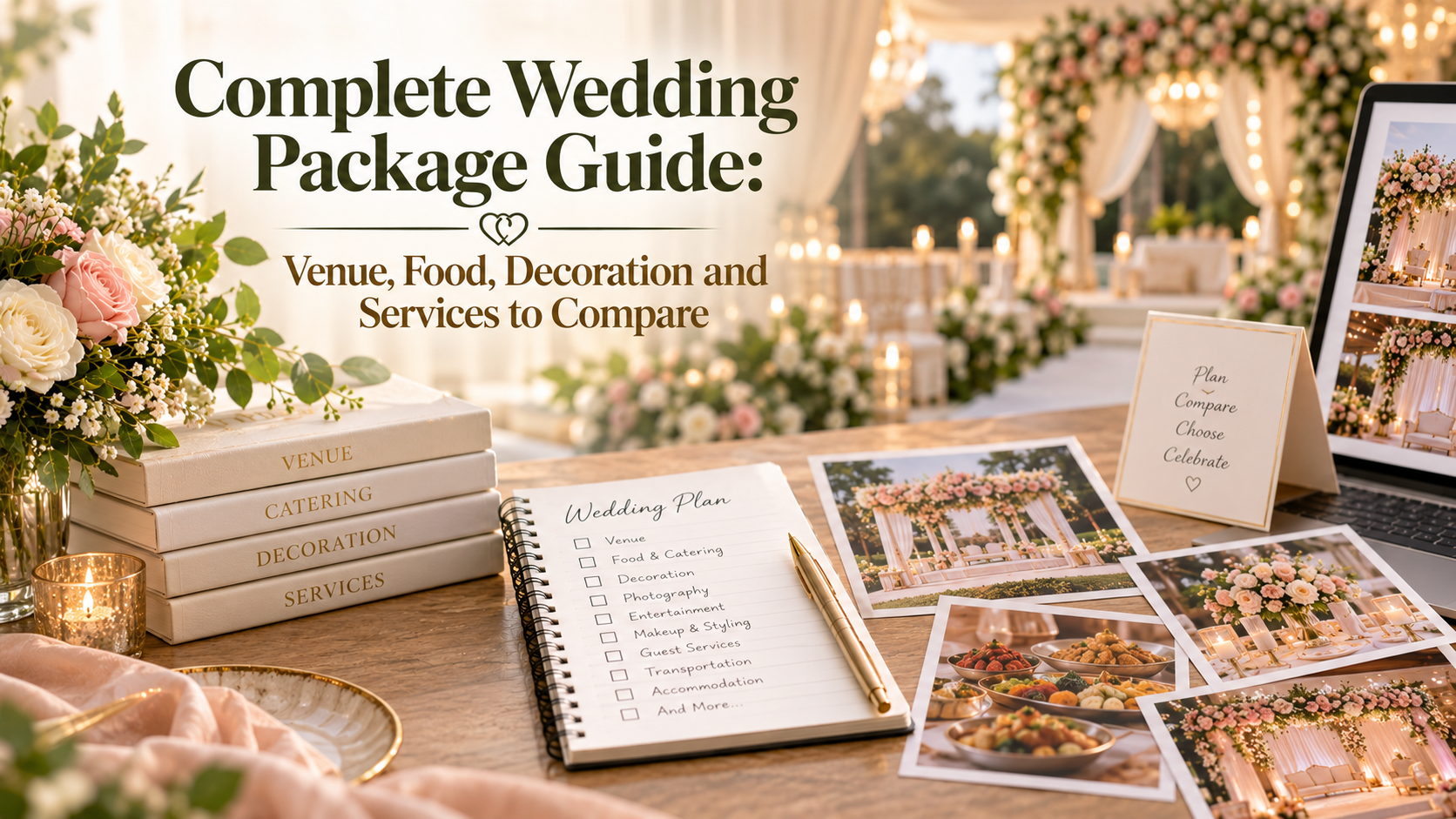
A wedding package typically bundles together the core elements of your celebration, usually the venue, food, decoration, and a set of services like coordination or AV support, into one combined offering. If you've started reaching out to venues and found that every one of them describes their package differently, you're not imagining things. It's one of the most confusing parts of wedding planning in India, and it's exactly why comparing options properly matters so much.
The confusion mostly comes down to inconsistent language. One venue's "package" might mean just the hall for a few hours, while another's includes catering, decor, and a dedicated coordinator for the same price. Without understanding what's actually inside each offer, couples end up comparing numbers that don't mean the same thing, which almost always leads to budget surprises later.
In this blog, we'll break down what a wedding package usually covers, how to compare them properly, and what to watch for before you sign anything.
What Does a Wedding Package Usually Include?
Most wedding packages are built around four core pillars: the venue itself, food and catering, decoration, and a set of additional services that keep the event running smoothly. How much of each is actually included, and at what quality level, is where packages start to differ wildly. A budget hall rental might only cover the space and basic chairs, while a resort package could bundle in everything down to guest accommodation and a wedding planner.
Understanding these four categories separately, before you start comparing prices, gives you a much clearer sense of what you're actually paying for. It also makes it far easier to spot when a seemingly cheaper option is missing something you'll end up paying for anyway.
Breaking Down Each Component of a Wedding Package
Once you know what to look for in each category, comparing venues becomes a lot less overwhelming.
Venue and Space
This covers the type of venue, whether it's a banquet hall, lawn, resort, or hotel, along with capacity, access hours, and how much time you get for setup and teardown. Some venues charge separately for extended hours, so it's worth confirming exactly what window you're paying for.
Food and Catering
Catering can be priced per plate or as a flat package, and this is usually where the biggest cost swings happen. Ask about menu customization, dietary accommodations, and the ratio of service staff to guests, since a thin staff count can slow down service at larger weddings.
Decoration
Base packages often include a standard stage and entrance setup, with anything beyond that treated as an upgrade. It helps to ask exactly what's included as standard versus what counts as a themed or premium add-on before you fall in love with a mood board that costs extra.
Additional Services
This bucket covers things like on-site coordination, sound and lighting, parking management, security, and sometimes accommodation for outstation guests. A wedding package with strong service inclusions here tends to reduce a lot of day-of stress.
What's the Difference Between a Wedding Package and an All Inclusive Wedding Package?
A standard wedding package might only cover the venue and a handful of basics, leaving catering, decor, and services to be arranged separately with outside vendors. An all inclusive wedding package, on the other hand, bundles the venue together with food, decoration, and core services into a single price. Neither option is automatically better, but they lead to very different planning experiences, so it's worth knowing which one you're actually looking at before comparing costs.
How to Compare Wedding Venue Packages the Right Way
The smartest way to compare wedding venue packages isn't to look at the headline number first. Start by listing everything each package includes, then request an itemized breakdown for anything left out, and price those gaps separately using real vendor quotes. Comparing the true, all-in totals rather than the advertised starting price is what actually reveals which option offers better value.
List every inclusion, not just the ones that stand out
Get an itemized quote for anything not covered
Price excluded items separately before comparing totals
Compare based on total value, not the first number you see
What Should You Watch Out for When Booking a Wedding Package?
Even well-structured packages can carry hidden costs. Service charges, gratuity, cake-cutting fees, and taxes don't always show up in the initial quote, and some venues restrict outside vendors or charge extra if your guest count changes closer to the date. It's worth asking directly about all of these upfront, in writing, rather than discovering them in the final invoice.
Making Venue Comparison Simple
With dozens of vendors, inconsistent package language, and details that change from venue to venue, comparing wedding packages properly takes real time and effort. This is exactly the gap Venue By Choice is built to close, bringing together banquet halls, lawns, resorts, hotels, and destination venues from across India with transparent details on what each package actually includes, so couples can compare options side by side instead of chasing down separate quotes from every shortlisted venue.
Conclusion
Choosing a wedding package ultimately comes down to understanding exactly what you're paying for across venue, food, decoration, and services, and comparing that full picture rather than a single starting price. Couples who take the time to break packages down this way tend to end up with far fewer surprises and a much clearer sense of value for their budget.
Wedding planning already involves enough decisions without package terminology adding to the confusion. Taking a structured, side-by-side approach to comparison isn't just about saving money, it's about walking into your big day with confidence that you know exactly what you booked.