Best Time to Book a Wedding Venue: When Should You Start Your Search and Reservation?
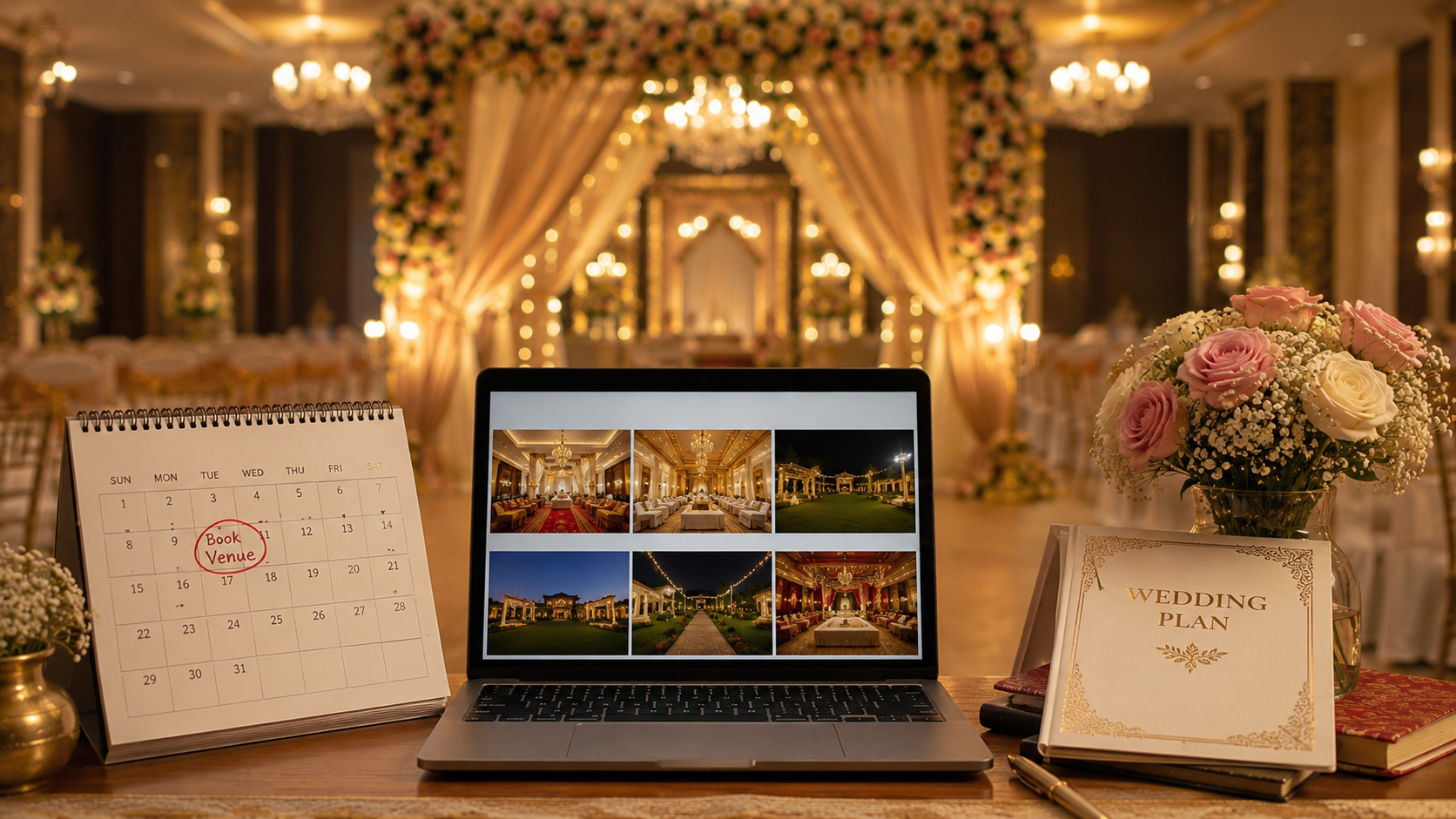
Picture a family beginning their wedding venue search four months before their intended date, energised and ready to find the right place. The first call to a banquet hall they've had in mind for years: the date is taken. The second preferred venue: same. A third and fourth option, both with significant compromises on location or capacity or quality: available, but not what anyone actually wanted. The best time to book a wedding venue, it turns out, wasn't four months before the wedding. It was eight or twelve months before, when the available options still included everything worth choosing from.
This scenario repeats so consistently in Indian wedding planning not because families don't know that popular venues book early but because the timeline feels abstract until it becomes concrete and urgent. A year before a wedding date, everything still feels theoretical. There's time to think, to decide, to explore. The problem is that while families are thinking and exploring, other families who started the same conversation two or three months earlier are signing contracts and taking the dates they want.
By the end of this blog, you'll know exactly how far in advance to start your venue search based on your target date, season, and the kind of venue you're looking for.
Why Indian Wedding Venue Booking Timelines Are Shorter Than They Feel
The core reason Indian wedding venue booking requires longer lead times than most families intuitively plan for is the concentration of demand on specific dates rather than a general scarcity of venues. Indian wedding planning is governed significantly by auspicious muhurat dates identified from the panchang, and these dates are not evenly distributed across the calendar. A given month might have three or four strongly auspicious dates that attract the majority of wedding bookings, with the surrounding dates seeing considerably less demand.
This concentration creates a specific dynamic: on the most auspicious dates within peak season, premium venues receive enquiries from dozens of families simultaneously, all targeting the same narrow date window. A venue with twelve functional halls might have all twelve committed on a particularly auspicious November Saturday twelve to fourteen months before the date itself, while the Sunday immediately after the same date might still have availability six months out. The question isn't whether venues are available in your general target month. It's whether your specific auspicious date, at your preferred venue, is still open by the time you make the call.
Wedding Venue Booking Timeline by Season
The right booking lead time varies significantly based on which part of the Indian wedding calendar your date falls in, and understanding these windows by season is the most practical way to know when your conversation needs to start.
Peak Season (October to December): Book 12 to 18 Months Ahead
This is the highest-demand period nationally, driven by the concentration of auspicious post-Dussehra, post-Diwali, and pre-winter dates. Premium venues in major cities with dedicated wedding infrastructure see their peak inventory committed twelve to eighteen months before popular dates, with the most sought-after halls at well-known properties going even earlier. If your target wedding falls anywhere in October, November, or December on a strongly auspicious date, the venue conversation should have started a year or more before.
Secondary Peak (February): Book 8 to 12 Months Ahead
February holds a distinct secondary demand spike from winter wedding dates and, in urban markets, Valentine's Day proximity. Premium venues for February auspicious dates typically commit eight to twelve months ahead, with shoulder-month dates having slightly more flexibility. The mistake families make with February is treating it as an off-peak month when it's consistently one of the more competitive booking windows.
Shoulder Season (January, March): Book 6 to 9 Months Ahead
January and March carry moderate demand from post-Makar Sankranti dates and the pre-Holi window respectively. These months offer more flexibility than peak but shouldn't be treated as genuinely open until you've confirmed availability. Six to nine months is the practical lead time for most venue types in these months, with good options typically available at this window if you move decisively rather than continuing to explore indefinitely.
Off-Peak Season (April to September): Book 3 to 6 Months Ahead
The summer and monsoon months carry fewer auspicious dates in most traditions and face practical challenges from heat and rain. Venue availability is considerably more flexible, and three to six months is generally sufficient for most venue types during this period. Some popular venues and dates within this window do book earlier for families with specific flexibility requirements, but the off-peak period gives the most planning room of any part of the calendar.
Is 6 Months Enough Time to Book a Wedding Venue?
It depends entirely on which month you're targeting and what type of venue you want. For off-peak months and shoulder season dates, six months is workable and sometimes leaves genuine room to negotiate. For peak season dates, particularly the concentrated auspicious windows in November and December, six months is often too late for premium venues and sometimes too late for mid-range options in competitive markets. The honest answer is: six months is enough time for some dates and not for others, which is why starting the venue conversation early enough to confirm availability before the timeline becomes critical is considerably less stressful than discovering the answer by running out of options.
The After State: What Good Venue Booking Timing Looks Like
The families who navigate venue booking most smoothly share a common pattern: they enter the venue conversation before they've become emotionally attached to a specific date. When the date is flexible until the venue search reveals what's available, the family has negotiating power and genuine choice. When the date is fixed before the venue search begins, the family's options are limited to whatever hasn't already been committed on that date.
The well-timed booking process looks like this in practice:
The venue conversation begins with a rough seasonal preference rather than a fixed date, allowing the venue search to inform the date rather than the date constraining the venue search
Shortlisting happens across two or three real options rather than one preferred venue, so the booking commitment can proceed whichever shortlisted venue becomes available first
The booking decision is made within one to two weeks of confirming availability rather than taking several weeks to decide, since availability on a popular date can change during extended deliberation
Once the venue is confirmed, the vendor conversation begins immediately rather than after the venue is settled, since caterers, decorators, and photographers for peak-season popular dates face equivalent availability constraints
A provisional hold is requested wherever the venue offers this, to give a defined decision window without risking the date to another enquiry during final deliberations
Why Vendor Availability Follows the Same Pattern as Venue Availability
Venue booking and vendor availability are not independent decisions. The same popular dates that make venues difficult to book also make experienced wedding vendors scarce, because photographers, decorators, and caterers have equivalent capacity constraints and receive their bookings from the same pool of families targeting the same auspicious dates.
A family that books their venue six months before a peak-season date often discovers that vendors who could have been available twelve months before are fully committed by the time the venue contract is signed. This cascade effect means late venue booking doesn't just mean settling for a less preferred venue. It means settling for less preferred vendors across every category simultaneously, since the best practitioners in each category fill their calendars on popular dates alongside venue bookings rather than after them.
Venue By Choice helps families get into the venue conversation early enough to have genuine choice across both venue and vendor categories, rather than working within the constrained options that remain after the most popular combinations have been committed. Their venue listings and booking support are available at venuebychoice.com.
What Happens If I Start Looking for a Wedding Venue Too Late?
Late venue search doesn't always mean no options, but it does consistently mean constrained ones:
Preferred venues on the target date are already committed, requiring either a date compromise or a venue compromise
The dates available at preferred venues may not align with the family's auspicious date requirements, creating a direct conflict between venue preference and cultural timing requirements
Budget flexibility can sometimes unlock options that are technically available, since premium pricing on a remaining popular date is one way venues manage late-stage demand
Weekday versions of popular dates sometimes remain available when weekend equivalents are fully committed, which suits some families but creates logistics challenges for others with guests traveling from outside the city
Secondary markets and less-established venues carry genuine availability but may require more due diligence since their operational track record is shorter than the established properties that book earliest
Conclusion
The best time to book a wedding venue is before the date feels urgent, which in practice means starting the conversation significantly earlier than most families intuitively plan for: twelve to eighteen months ahead for peak-season auspicious dates, six to nine months for shoulder season, and three to six months for off-peak periods. Understanding these windows before the planning process begins transforms the venue search from a race against other families' bookings into a structured process with genuine options.
The families who secure exactly the venue they wanted for exactly the date they wanted almost always did one thing differently from those who settled: they started the conversation early enough that settling was never necessary. That single timing decision, made before any specific venue or date had become emotionally important, is what made the difference between a venue search that felt stressful and one that felt straightforward.