
7 Questions to Ask Before Booking a Wedding Reception Venue
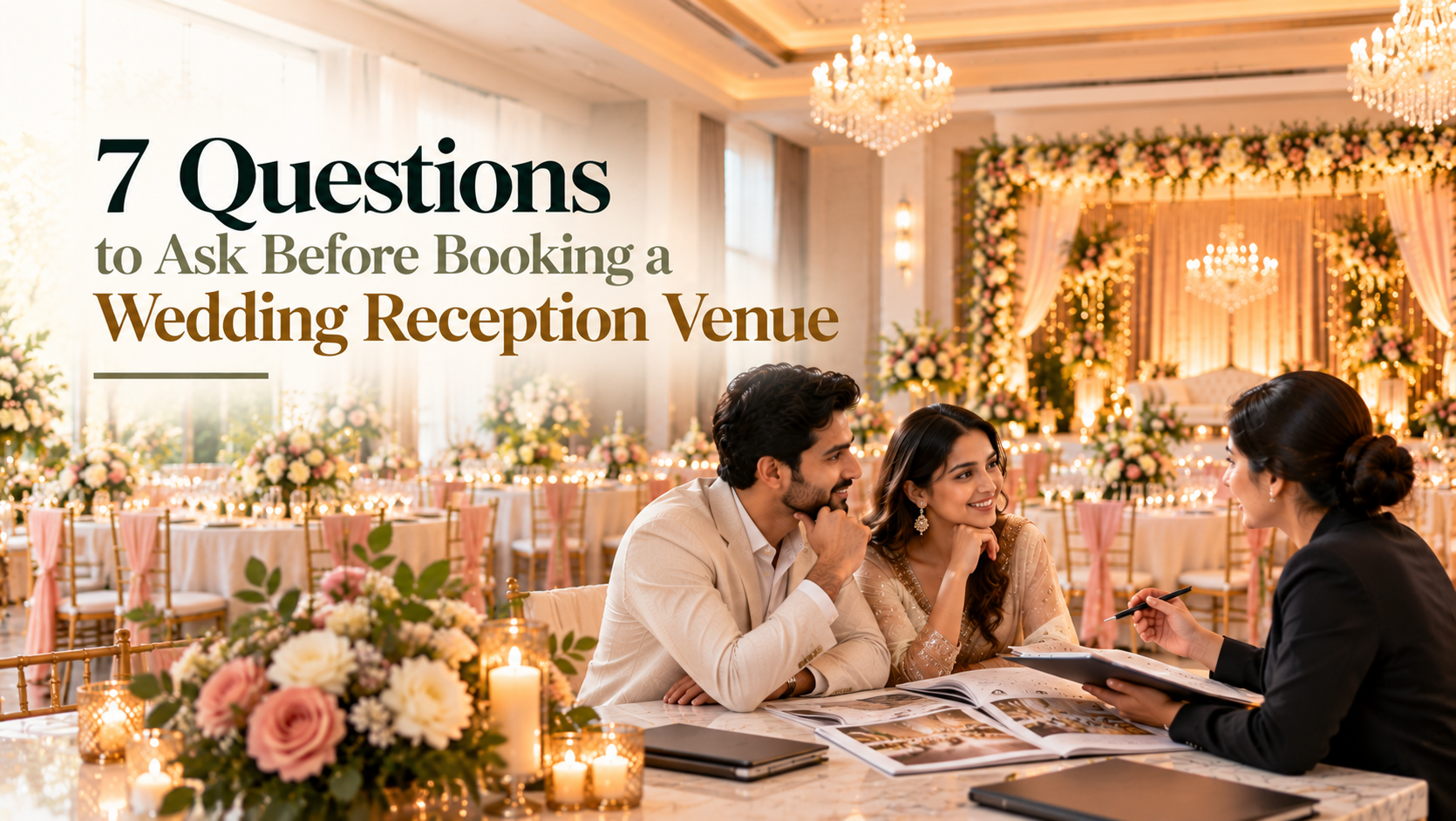
The questions to ask before booking a wedding reception venue matter more than most couples realise during their first site visit. A venue that photographs beautifully and feels right on a walkthrough can still disappoint on the wedding day if the operational details were never explored. Asking the right things upfront, before any deposit changes hands, is the single most effective way to protect your budget, your timeline, and your peace of mind.
The challenge is that venue visits tend to happen in a state of excitement. You walk through a space, picture your guests there, and feel something, and that feeling is worth paying attention to. But decisions made in that emotional state often leave practical questions unasked. Costs you assumed were included turn out not to be. Restrictions on music or vendors surface only after the contract is signed. The most avoidable problems in wedding planning almost always trace back to questions nobody thought to raise at the right time.
In this blog, we'll walk through 7 essential questions that every couple and family should have ready before committing to a wedding reception venue.
1. What Is the Maximum Guest Capacity and How Is It Calculated?
The capacity figure a venue advertises is usually the technical maximum, not the comfortable one. A hall that fits 300 guests in a theatre-style arrangement will feel significantly more cramped once you add round dining tables, a dance floor, a stage, a buffet setup, and enough space for the photography team and catering staff to move freely. That same space might comfortably accommodate 200 for a sit-down dinner.
When you ask this question, ask it specifically for your format. Describe your rough layout, including dining style, dance floor requirements, stage or no stage, and whether you are planning a buffet or plated service. Ask the venue coordinator what your format translates to in realistic guest numbers. Getting this right early saves you from overbooking a cramped space or under-using a hall that makes your gathering feel sparse.
These are exactly the kinds of questions to ask a wedding venue before you fall in love with a space that does not actually fit your plans.
2. What Exactly Is Included in the Booking Fee?
Venue pricing is rarely as straightforward as the headline figure suggests. Some venues include tables, chairs, basic lighting, and a changing room in their base price. Others treat every additional element as a separate line item. A venue quoted at a lower price can end up costing considerably more once you account for everything you assumed was already covered.
Ask for a complete breakdown of what the booking fee includes and what is available at extra cost. Common add-ons include linens, cutlery, AV equipment, standby generator access, and parking management. If your event will require any of these, confirm their status in writing before you sign anything.
3. Are There Restrictions on Décor, Music, Outside Caterers or Vendors?
This is one of the most important questions to ask before booking, and one of the most commonly overlooked. Many venues have exclusive catering arrangements, meaning you are required to use their in-house kitchen or a panel of approved vendors. Some have noise curfews that end the music at a fixed hour. Others restrict open flames, certain types of floral installations, or atmospheric effects.
If you have a particular caterer, decorator, or live band in mind, confirm early whether the venue permits outside vendors or charges a surcharge for bringing them in. Some couples arrive at contract stage only to find that their planned entertainment conflicts with house rules they cannot negotiate around. A venue that genuinely suits your vision will be transparent about its restrictions from the very first conversation.
4. What Is the Payment Schedule, Overtime Policy, and Cancellation Terms?
This is where the most practical banquet hall booking tips apply. Receptions rarely end exactly on time, and overtime billing at wedding venues can be steep, sometimes charged in half-hour increments. Before you sign anything, ask what happens if your event runs over, what the rate is, and how the overtime clock is measured.
On the financial side, understand the full payment schedule: when each instalment is due, what the non-refundable deposit actually covers, and what the cancellation or postponement policy looks like in practical terms. A venue with clearly written, fair cancellation terms is one that respects its clients. If the terms are explained verbally but do not appear in the contract, that is worth following up on before you proceed.
5. How Many Events Does the Venue Host on Your Date?
Most couples never think to ask this, and it is one of the more revealing questions you can put to a coordinator. Some venues run two or three events simultaneously in different halls, sharing car parks, entrances, and sometimes service staff between all of them.
This is not automatically a problem, but you should know about it before you book. Ask whether your event will have a dedicated team, a separate entrance if available, and whether the timelines of any other events on that day are likely to overlap with yours in a way that affects the experience for your guests.
6. What Are the Parking, Accessibility, and Nearby Accommodation Options?
Guest experience begins before anyone walks through the door. It starts when people arrive, look for parking, and figure out how to get in. Ask how many parking spaces are available and whether that number is realistic for your expected guest count. Find out if valet parking is offered, what it costs, and whether the venue has provisions for guests with limited mobility.
For outstation guests and the wedding party, ask whether the venue can recommend nearby accommodation at different price points. This detail is easy to overlook during venue selection but comes up repeatedly as you manage guest logistics closer to the date.
7. What Is the Backup Plan If Something Goes Wrong on the Day?
Power outages, weather changes for venues with outdoor spaces, a vendor no-show, or a scheduling conflict with an adjacent event are all unlikely but not impossible. The right venue does not dismiss these scenarios. A good venue coordinator should walk you through their contingency protocols clearly and without hesitation.
Ask whether there is a dedicated day-of coordinator from the venue team, whether a standby generator is on the premises, and how the venue handles responsibility if a service failure on their end disrupts your event. Asking this question is not pessimism. It is good judgement, and a venue that has solid answers to it has run enough events to know that preparation matters.
Conclusion
The questions to ask before booking go beyond how a venue looks on a tour. They reveal how it actually operates, what it genuinely includes, and how the team handles the moments that do not go to plan. Working through these seven questions gives you a much clearer picture of whether a venue is the right fit, not just an impressive one.
A venue that answers these questions with clarity, patience, and confidence is one worth trusting with one of the most important days of your life. One that hedges, leaves things unwritten, or sidesteps the detail usually does so for a reason worth paying attention to.